
Sushi recipes don’t have to mean specialty gear, mystery fish, or a kitchen covered in rice, you can make satisfying sushi at home with a few reliable building blocks and some realistic shortcuts.
If you’ve tried once and felt like everything fell apart, you’re not alone, the pain point is usually rice texture and assembly, not your “skill.” Once those two click, rolls, hand rolls, and sushi bowls become weeknight-friendly.
This guide keeps it practical: what to buy in the U.S., how to prep rice without stress, easy recipe templates you can repeat, and a quick safety note for raw seafood so you know where the line is.
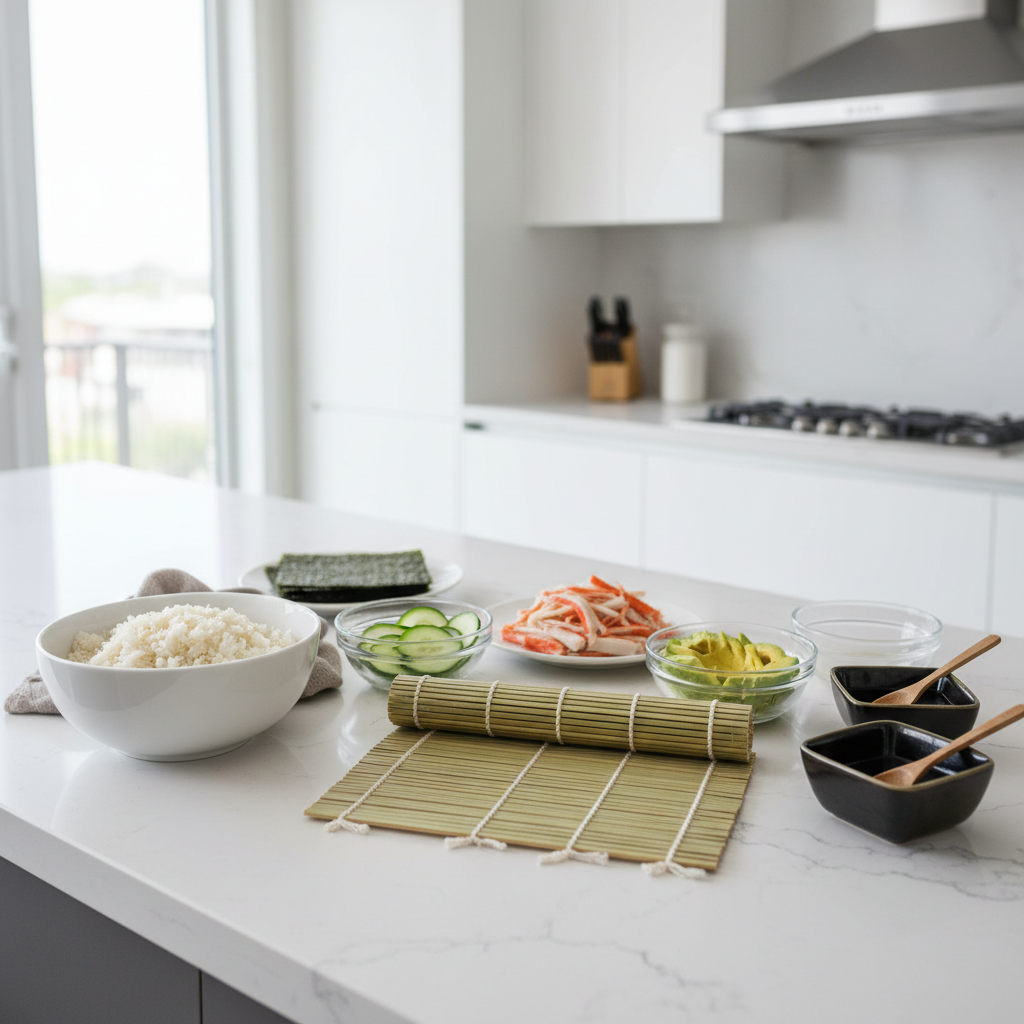
What makes “easy” sushi at home: the 80/20 approach
Most easy sushi comes down to choosing formats that forgive imperfections. Tight maki rolls look impressive, but they punish sticky fingers and uneven fillings. Hand rolls and sushi bowls taste just as good and stay neat.
- Start with bowls or hand rolls before you chase perfect cut rolls.
- Use cooked or ready-to-eat fillings when you want low risk: imitation crab, shrimp, smoked salmon, canned tuna.
- Limit fillings to 2–3 per roll, more ingredients often means more falling apart.
- Keep “wet” ingredients controlled, pat cucumber, crab salad, and tofu dry so nori doesn’t turn soggy.
Also, don’t overthink equipment. A bamboo mat helps but isn’t mandatory, and a sharp knife matters more than a fancy one.
Shopping list for simple sushi recipes (U.S.-friendly)
Here’s a realistic grocery list that works for most beginner sushi recipes. If you have a decent Asian market nearby, you’ll save money, but mainstream stores usually cover the basics now.
Staples
- Short-grain rice labeled “sushi rice” or Japanese short grain
- Rice vinegar (seasoned or unseasoned)
- Nori sheets
- Soy sauce, toasted sesame seeds
- Optional but helpful: furikake, pickled ginger, wasabi
Easy fillings (mix and match)
- Avocado, cucumber, scallions, carrots
- Imitation crab, cooked shrimp, smoked salmon
- Canned tuna or salmon, Kewpie mayo (or regular mayo)
- Cream cheese (popular in U.S.-style rolls)
- Eggs for tamago-style omelet strips
Tools that actually help
- Fine-mesh strainer (for rinsing rice)
- Nonstick or wet hands for rice handling
- Very sharp knife plus a damp towel to wipe between cuts
Sushi rice that doesn’t fight you (stovetop or rice cooker)
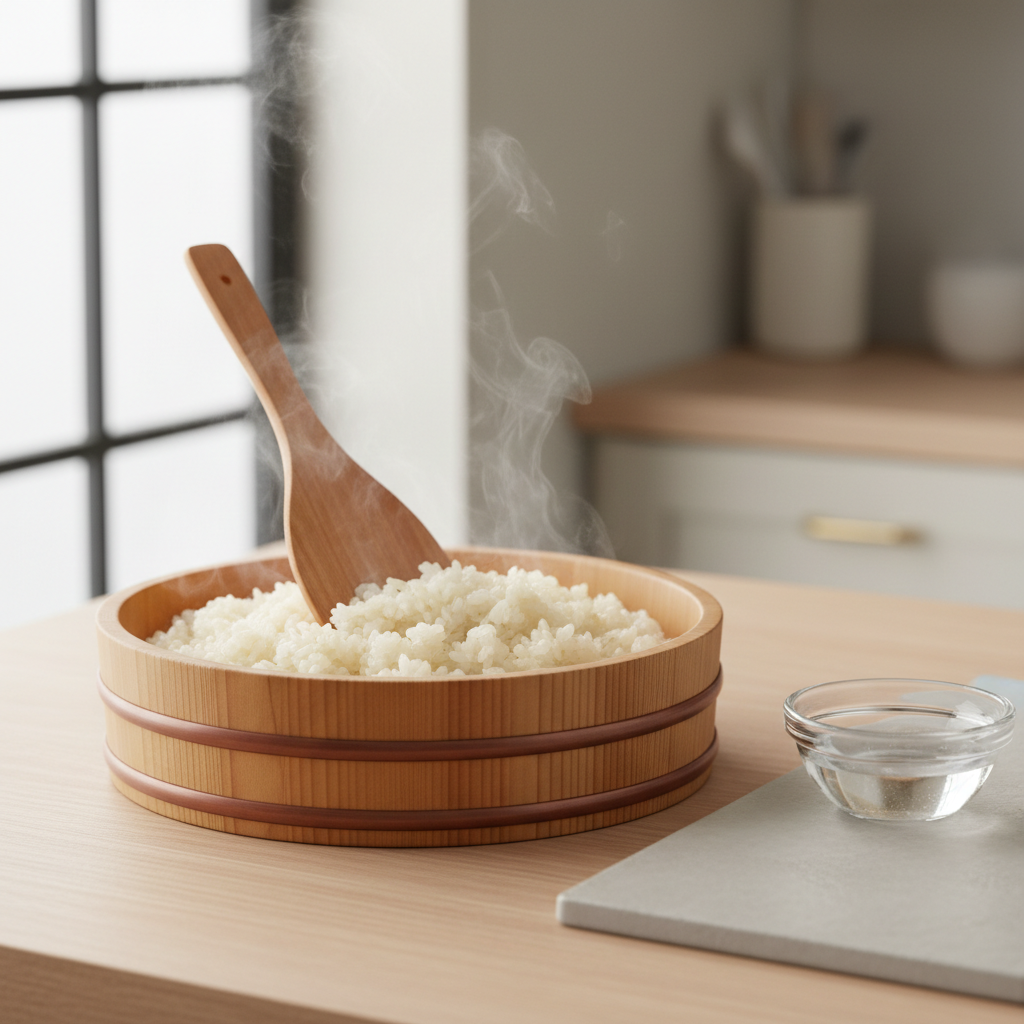
When people say homemade sushi “doesn’t taste right,” it’s often the rice seasoning or texture. Aim for tender grains that still hold shape, glossy but not mushy.
Base method: rinse short-grain rice until water runs mostly clear, cook it, then fold in seasoned vinegar while it cools.
- Rinse 3–6 times, drain well so you don’t dilute the cook.
- Cook per package directions, rice cookers make this easier.
- Season while rice is warm, gently “fold” rather than stir hard.
- Cover with a clean towel if you need to hold it 30–60 minutes, it helps prevent drying.
According to the USDA, cooked rice should not sit at room temperature too long, if you’re prepping ahead, keep time in mind and refrigerate leftovers promptly.
Quick self-check: which sushi format should you make tonight?
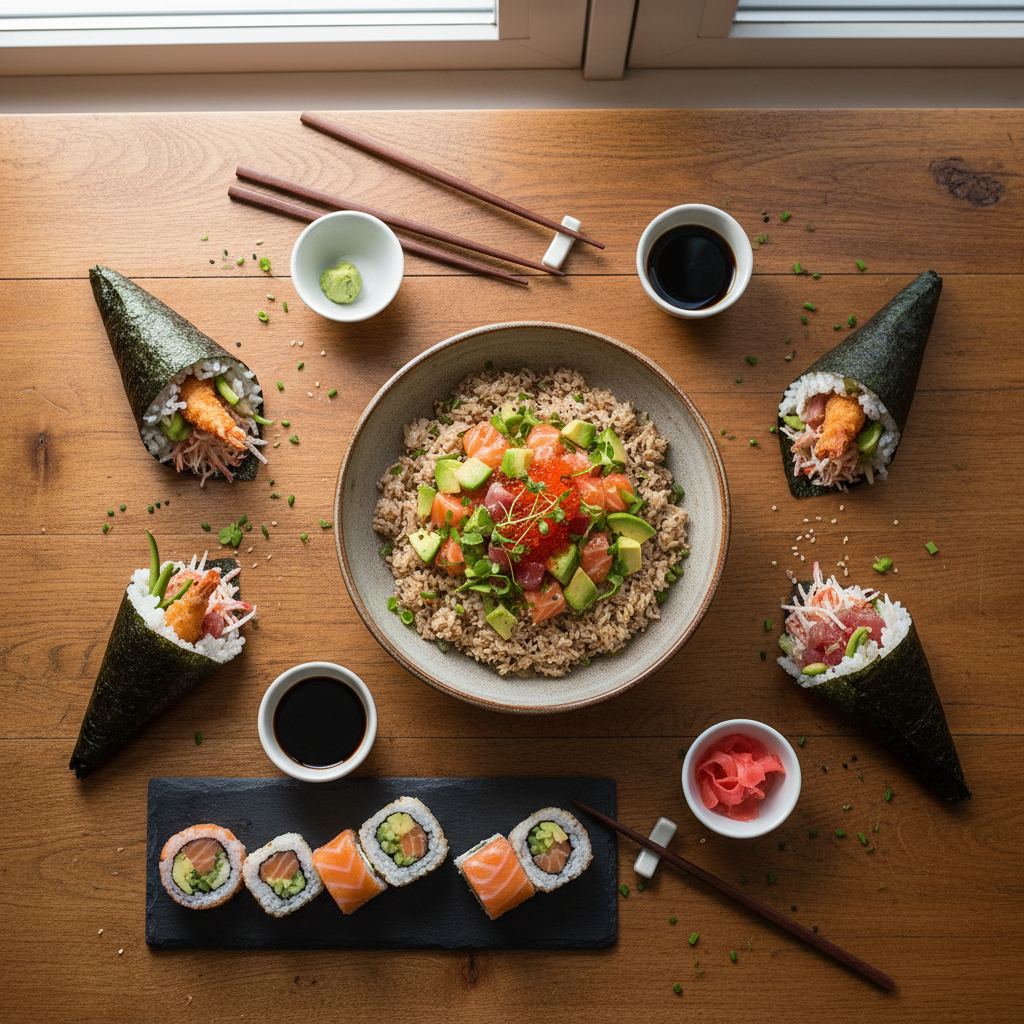
If you want sushi without a learning curve, pick the format that matches your patience level and ingredients.
- You’re tired, want dinner fast: sushi bowl or chirashi-style rice bowl.
- You want “real sushi” but low stress: temaki (hand rolls).
- You want sliceable rolls for a platter: maki rolls, keep fillings simple.
- You’re avoiding raw fish: cooked shrimp, smoked salmon, tofu, egg, veggies.
This matters because the same ingredients behave differently, avocado is forgiving in a bowl, but can turn a roll into a slippery situation if it’s overripe.
Easy sushi recipes you can repeat (with minimal fuss)
Think of these as templates. Once you make one successfully, you can swap fillings and keep the method.
1) Spicy tuna salad sushi bowl (no rolling)
- Base: sushi rice in a bowl
- Protein: canned tuna mixed with mayo, a little sriracha, and soy sauce
- Toppings: cucumber, avocado, scallions, sesame seeds, nori strips
- Finish: drizzle extra soy sauce or a light sesame oil (optional)
Tip: if you want more “sushi shop” flavor, add a small pinch of sugar to the tuna mix and a squeeze of lemon, not required, but it balances richness.
2) California roll-style maki (beginner-friendly roll)
- Fillings: imitation crab (or crab salad), cucumber, avocado
- Extras: sesame seeds on the outside if you like
Keep rice layer thin, thicker rice is the most common reason rolls feel heavy and won’t seal.
3) Smoked salmon + cream cheese hand rolls (temaki)
- Fillings: smoked salmon, cream cheese, cucumber sticks
- Wrap: half-sheet of nori, rice on one side, roll into a cone
Hand rolls are forgiving, and they taste great even when they look a little rustic, which is kind of the point on a weeknight.
4) Shrimp tempura shortcut roll (air fryer or store-bought)
- Protein: frozen tempura shrimp baked or air-fried
- Fillings: cucumber, avocado
- Sauce: mayo + sriracha + a touch of honey (optional)
If you’re feeding kids or picky eaters, this one usually lands, it’s crunchy, familiar, and doesn’t require raw seafood.
Rolling and cutting without frustration (practical technique)
Rolling feels “hard” because rice sticks to everything and pressure gets weird. Two small habits fix most of it: wet hands, and tighter control of where fillings sit.
- Wet your fingers before handling rice, a small bowl of water nearby helps.
- Place fillings in a line slightly below center, not piled in the middle.
- Use gentle compression as you roll, you’re shaping, not crushing.
- Seal with a few rice grains at the edge if nori won’t stick.
For clean slices, wipe the knife between cuts and use a single confident down-and-forward motion, sawing tends to pull everything out.
Safety and ingredient notes (especially for raw fish)
Raw fish at home is doable for some people, but it’s the part where you should be honest about your comfort level and your sourcing. “Sushi-grade” isn’t a tightly regulated label in many cases, so quality depends on the seller and handling.
- If you’re new: start with cooked shrimp, smoked salmon, or imitation crab.
- If you want raw fish: buy from a reputable fish market that can advise on intended raw consumption, and keep it properly chilled.
- If you’re pregnant, immunocompromised, or unsure: consider avoiding raw seafood and ask a healthcare professional for personalized guidance.
According to the FDA, food safety for seafood depends heavily on proper handling and temperature control, which is why sourcing and storage matter as much as the recipe.
Make-it-easy planning: a simple prep table for weeknights
If you want sushi recipes to become routine, plan around what you can prep once and reuse. This table keeps it realistic.
| Prep item | Time saved later | How to store | Best for |
|---|---|---|---|
| Cooked sushi rice | Biggest | Cool slightly, cover, use soon; refrigerate leftovers promptly | Bowls, hand rolls, maki |
| Cut veggies (cucumber, carrots) | Medium | Container with paper towel to reduce moisture | All formats |
| Spicy tuna or crab salad | Medium | Sealed container, keep cold | Bowls, rolls |
| Nori + toppings station | Small but helpful | Dry nori, room temp; toppings in small bowls | Hand roll nights |
Key takeaways (so you don’t overcomplicate it)
- Choose the format based on your energy: bowls and hand rolls are the easiest wins.
- Get rice right and the rest becomes forgiving.
- Keep fillings simple, fewer ingredients usually means cleaner rolls.
- Be cautious with raw seafood, sourcing and temperature control matter more than tutorials.
Conclusion: your next sushi night can be simple
The best homemade sushi is the kind you’ll actually make again, not the kind that looks perfect in photos. Pick one template, stock a small set of staples, and give yourself permission to keep it a little messy at first.
If you want a low-effort start this week, do a sushi bowl night, then graduate to hand rolls once your rice feels consistent, that progression tends to keep the fun part without the frustration.
FAQ
What are the easiest sushi recipes for total beginners?
Sushi bowls and temaki hand rolls are usually the least stressful, you avoid tight rolling and slicing, but still get the classic flavors and textures.
Can I make sushi without a bamboo mat?
Yes. A mat helps with even pressure, but many people start by shaping rolls with parchment paper or plastic wrap, and hand rolls don’t need any special tool.
What rice should I buy for sushi in the U.S.?
Look for Japanese short-grain rice or bags labeled “sushi rice.” Long-grain varieties tend to separate too much, which makes assembly harder.
How do I keep sushi rolls from falling apart?
Use a thinner rice layer, limit fillings, and apply gentle compression as you roll. Also, pat watery ingredients dry so nori can stay firm and seal.
Is it safe to use raw salmon from the grocery store?
It depends on sourcing and handling. If you want raw fish, many people prefer a reputable fish market that can advise on raw consumption, and if you’re unsure, cooked or smoked options are a safer direction.
How far ahead can I make sushi for a party?
For best texture, many rolls taste better the same day, especially anything with nori, which softens over time. If you need to prep, make fillings and cut veggies ahead, then assemble closer to serving.
What are good sushi fillings if I don’t like fish?
Egg (tamago-style), avocado, cucumber, roasted sweet potato, tofu, and tempura shrimp are popular. You can also do a “veggie roll” and add sesame or a creamy sauce for richness.
If you’re trying to build a small rotation of sushi recipes without buying a dozen specialty items, start with two sauces, three core fillings, and one format you enjoy, then expand slowly once you know what your household actually eats.