
If you keep wondering how to cook brussel sprouts crispy but end up with soft, steamed-looking sprouts, you’re not alone, the “crisp” part usually fails long before they hit the oven or pan.
Crispy Brussels sprouts come down to a few unglamorous details: moisture control, enough surface contact with heat, and not crowding the cooking surface. Get those right, and you can reliably land that browned, crackly outside with a sweet, tender center.
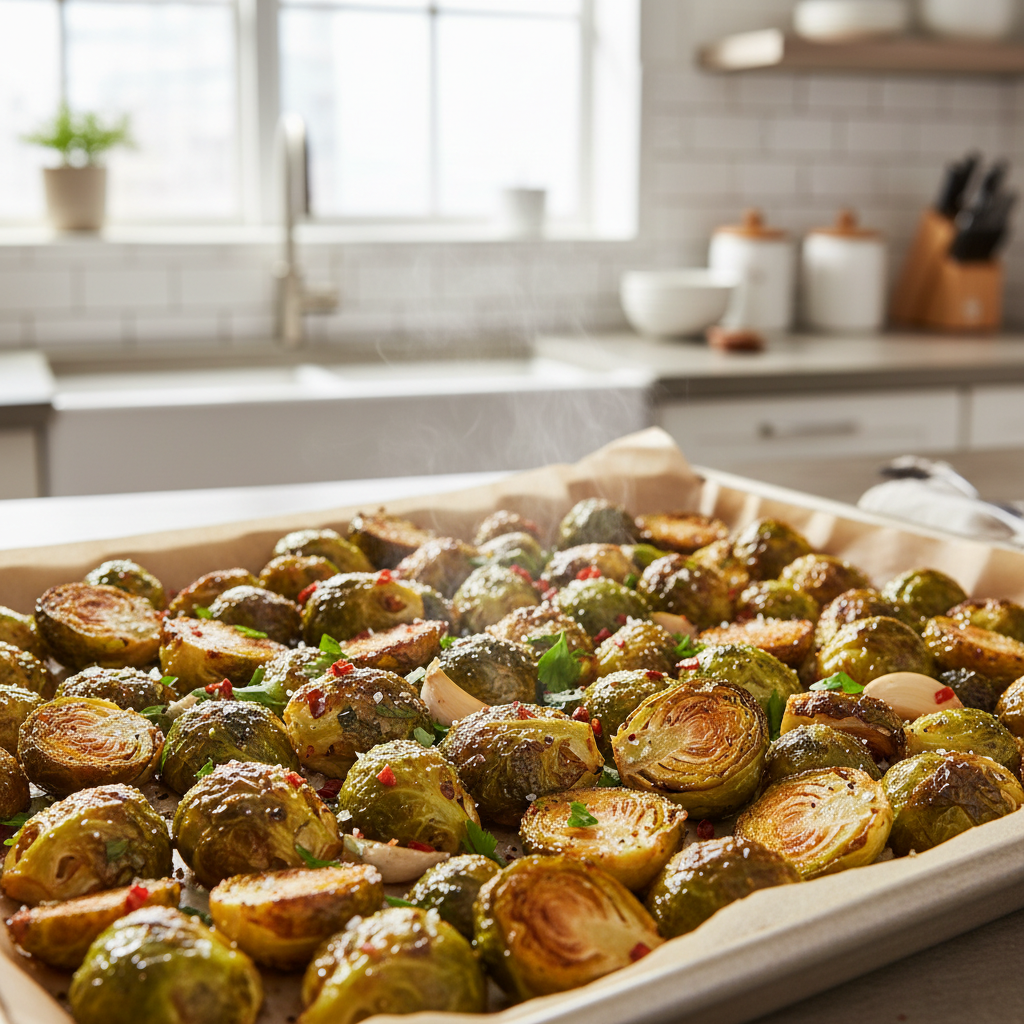
In this guide, I’ll show you the core techniques that actually move the needle, plus quick “fixes” when a batch starts going sideways, and a simple table to choose between roasting, air frying, and pan-searing based on your kitchen and time.
What “crispy” Brussels sprouts really means (and why most batches miss it)
When people say crispy Brussels sprouts, they usually want two textures at once: browned leaves that almost chip at the edges, and a center that still tastes like a vegetable, not a dry pellet.
Most failures come from one of these:
- Too much moisture on the surface, water has to evaporate before browning can start.
- Not enough heat contact, especially when sprouts are piled up or placed cut-side up the whole time.
- Too low temperature, which slowly steams instead of searing/roasting.
- Over-oiling, which sounds counterintuitive, but excess oil can “fry-soften” and prevent blistering.
According to USDA Food Safety and Inspection Service, vegetables should be washed under running water to remove dirt and reduce surface contamination. That washing step is helpful, but it also adds water, so drying becomes non-negotiable if crispness is the goal.
Prep that makes the difference: size, drying, and seasoning timing
Crispiness starts with prep, not the cooking method. This part feels boring, but it’s where the best batches separate from the okay ones.
Cut for maximum browning
- Trim the dry stem end, then halve medium sprouts so you get a flat face for browning.
- For very large sprouts, quarter them so the pieces cook through before the outer leaves burn.
- Keep sizes consistent so one group doesn’t scorch while another stays pale.
Dry them like you mean it
- After rinsing, spin in a salad spinner or towel-dry aggressively.
- Optional but effective: let them air-dry on a towel for 10–15 minutes.
Salt strategy (so you don’t accidentally pull water out too early)
Salt draws moisture to the surface. That’s great after browning starts, but if you heavily salt too early, sprouts can sweat and stall crisping. A practical approach:
- Use a light salt touch before cooking.
- Finish with a final pinch right after cooking, when the surface is hot and dry.
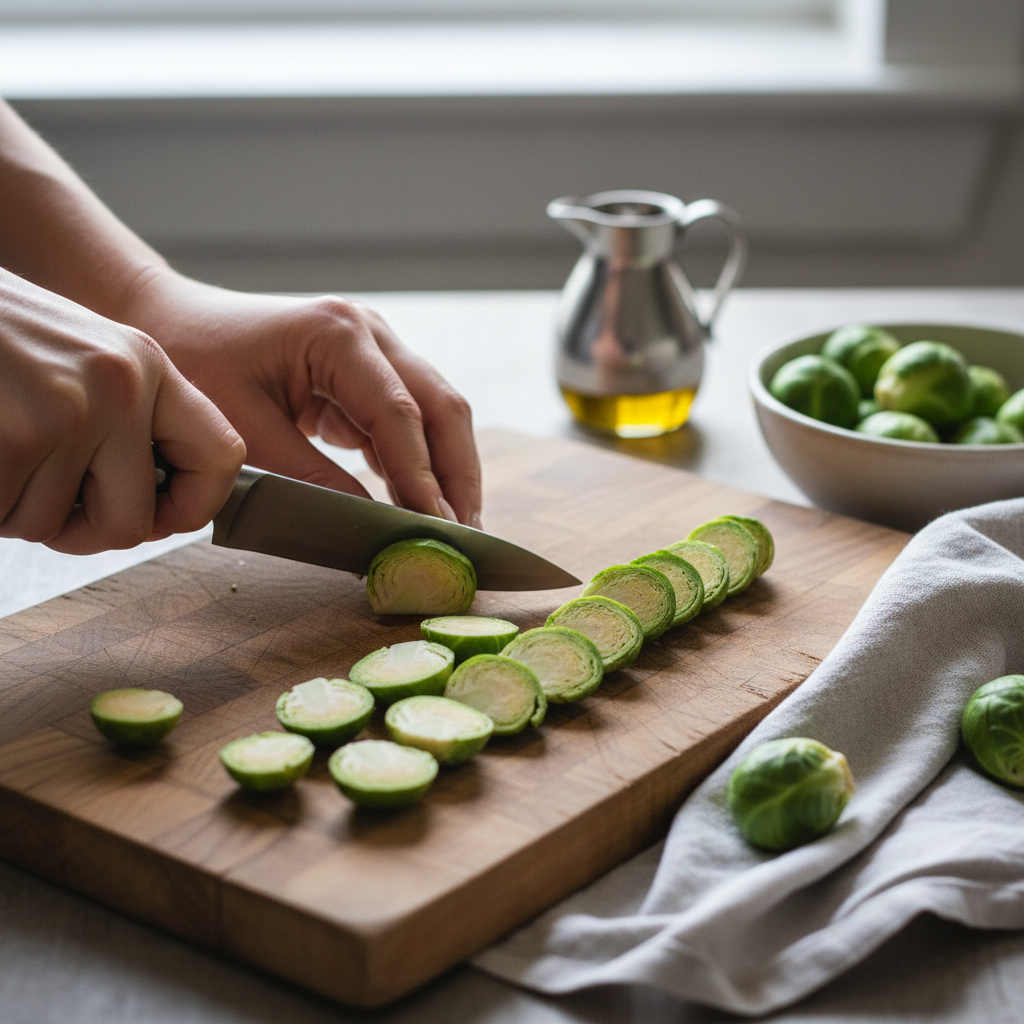
Key takeaway: if you want to learn how to cook brussel sprouts crispy, treat water as your main opponent, not the vegetable itself.
Choose your method: roasting vs air fryer vs stovetop (quick decision table)
All three methods can work, but each has a different “sweet spot.” Here’s the quick chooser.
| Method | Best for | Typical time | Crisp potential | Common failure |
|---|---|---|---|---|
| Oven roast | Big batches, even browning | 20–30 min | High | Overcrowding the pan |
| Air fryer | Fast, very crisp edges | 12–18 min | Very high | Basket crowding, uneven shake |
| Stovetop sear + steam | Deep browning, small batches | 10–16 min | High | Too much liquid, soggy finish |
If you’re cooking for a crowd, oven roasting stays easiest. If you’re chasing maximum crunch with minimal wait, the air fryer usually wins. If you want intense caramelization and don’t mind babysitting, stovetop is underrated.
Oven method: reliably crispy roasted Brussels sprouts (step-by-step)
This is the most forgiving way to get restaurant-style crisp edges without special equipment.
What you need
- Halved Brussels sprouts (dry)
- Oil with a higher smoke point (avocado, canola, grapeseed, or light olive oil)
- Salt, pepper
- Sheet pan, ideally heavy
Steps
- Preheat hot: 450°F is a strong default for crispness in many home ovens.
- Light oil coat: toss with just enough oil to thinly sheen the cut sides, excess oil tends to mute blistering.
- Single layer: place cut-side down, give each piece breathing room.
- Roast: 15 minutes, then check the cut sides for deep browning.
- Flip and finish: 5–10 minutes until outer leaves brown and crisp.
- Season to taste: final salt, pepper, and any acidic finish (lemon, vinegar) after cooking.
Don’t chase “even color” too early. Crisp Brussels sprouts often look a little patchy until the last stretch, then they suddenly turn golden in a hurry.
Air fryer method: fast crisp edges without a ton of oil
An air fryer makes it easier to get that crunchy leaf texture, but it’s also easy to crowd the basket and end up with mixed results.
Steps
- Preheat if your model benefits from it, many do better with a 3–5 minute preheat.
- Toss dry sprouts with a small amount of oil, then lightly salt.
- Cook around 375–400°F for 12–18 minutes, depending on size.
- Shake or toss every 4–5 minutes, this matters more than people think.
If you’re still dialing in how to cook brussel sprouts crispy in an air fryer, try cooking a smaller load first. A half-full basket often outperforms a packed one, even if it takes two rounds.
Stovetop method: sear for browning, then finish without going soggy
Stovetop Brussels sprouts can be deeply browned, but the line between “tender” and “wet” is thin.
Steps
- Heat a wide skillet over medium-high, add a thin oil layer.
- Add halved sprouts cut-side down, don’t move them for 4–6 minutes.
- When the cut sides look dark golden, add 1–2 tablespoons water (not more), then cover 2–3 minutes to finish the centers.
- Remove lid, let remaining moisture cook off, then season.
The “uncover and dry out” step is where crisp texture returns, skipping it is how you get a great sear that turns limp five minutes later.
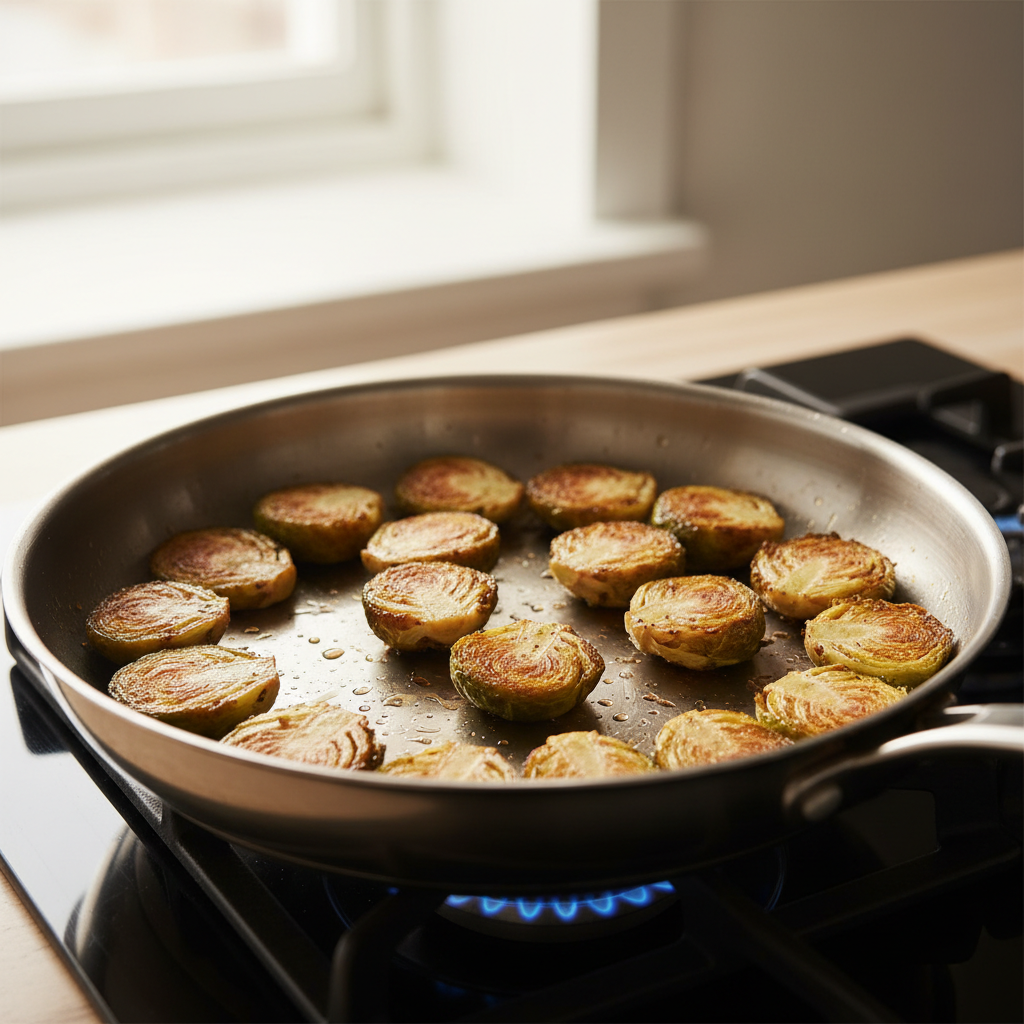
For food safety, cook on stable heat and avoid splattering oil; if you have concerns about smoke point or kitchen ventilation, adjust temperature and use an oil that tolerates higher heat.
Troubleshooting: quick fixes when sprouts won’t crisp
Sometimes you do “everything right” and still get pale sprouts, usually it’s one of these easy-to-miss issues.
- They’re steaming: spread them out, switch pans, or cook in two batches.
- Too wet: return to heat uncovered for a few minutes, moisture has to leave before browning.
- Not enough heat: bump oven temp up 25°F, or preheat longer, many ovens run cool.
- Wrong pan: thin, warped pans can cause uneven heat; a heavier sheet pan helps.
- Cut-side up: you lose contact, start cut-side down for stronger browning.
Quick recovery move: if a roasted batch looks soft at minute 20, move the pan to a higher rack for 2–4 minutes, watch closely, the edge between crisp and burnt is short.
Flavor finishes that keep them crispy (and what can soften them)
The best seasoning often happens after the crisp texture is already built.
Crisp-friendly finishes
- Lemon zest plus a squeeze of lemon right before serving
- Balsamic reduction drizzled lightly, thicker reductions add flavor without soaking
- Parmesan sprinkled at the end, or in the last 2 minutes if you want it to melt
- Chili flakes or Aleppo pepper
- Toasted nuts for extra crunch
Finishes that often soften
- Heavy sauces added on the pan, especially creamy dressings
- Too much honey or syrup early, sugars can burn before the centers tenderize
- Covering or storing hot sprouts in a sealed container, trapped steam kills crispness
If you’re meal prepping, store roasted sprouts uncovered until they cool, then refrigerate, and re-crisp in a hot oven or air fryer instead of the microwave.
Practical checklist: are your Brussels sprouts set up to get crispy?
- Dry: no visible water, no damp towel marks
- Flat surfaces: halved or quartered, not whole (unless very small)
- Enough space: single layer, no pileups
- High heat: hot oven, hot basket, or properly preheated pan
- Season smart: light salt early, final seasoning after crisping
Run this list once and you’ll usually spot why a batch isn’t browning, it’s the fastest way to turn “I tried” into “I nailed it.”
Conclusion: your next crispy batch is mostly about surface and space
When you strip it down, how to cook brussel sprouts crispy is less about secret ingredients and more about controlling moisture, keeping a single layer, and giving the sprouts real contact with high heat. Pick the method that fits your kitchen, then commit to drying and spacing, those two habits change everything.
Tonight, try this: halve them, dry them longer than feels necessary, roast at 450°F cut-side down, and don’t crowd the pan. If you want a faster win, do the same prep and let the air fryer handle the crunch.