
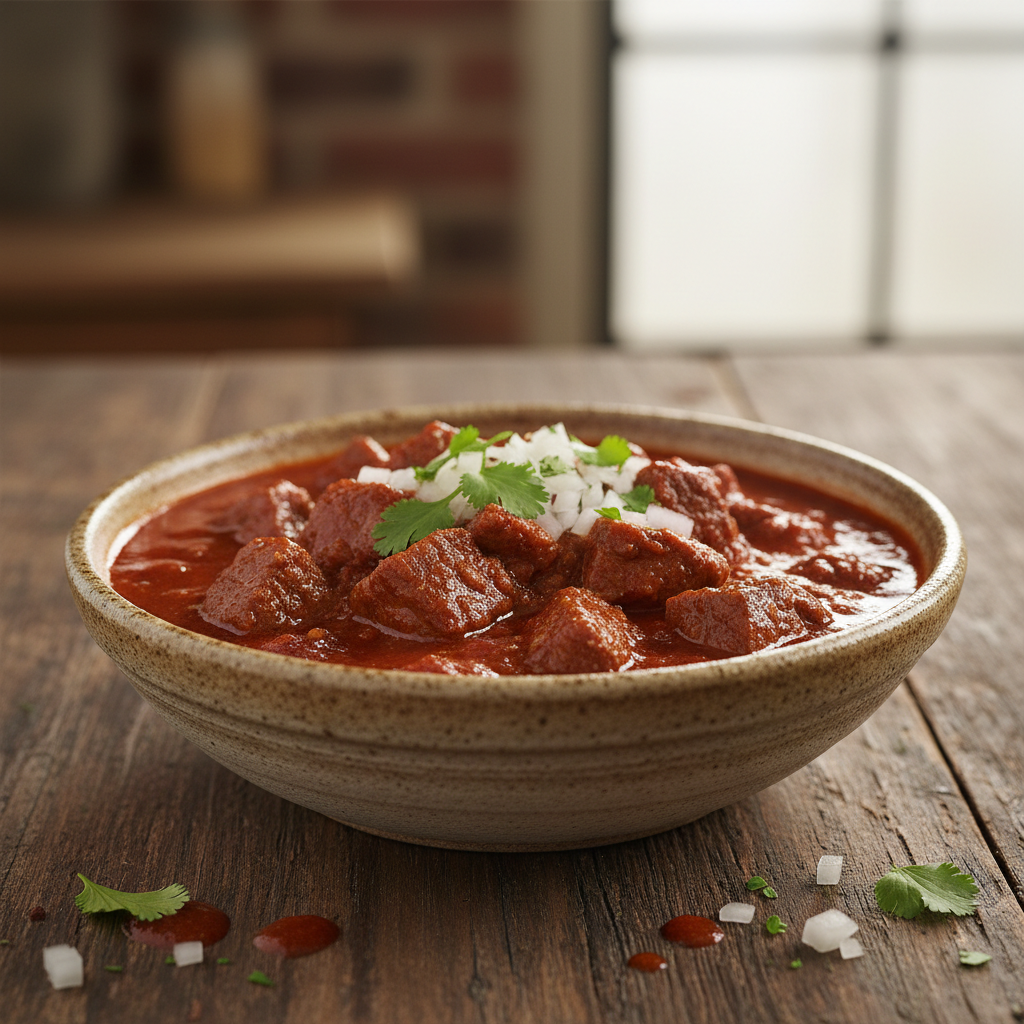
Texas chili recipe searches usually come from one very specific pain point: you want that deep, beefy, no-beans bowl with a rich red color, not a soupy stew that tastes like tomato sauce.
The good news is that “Texas-style” chili is mostly technique, not mystery. When you understand how chiles build flavor, why browning matters, and how to thicken without beans, you can make a pot that tastes like it cooked all day, even if you start after work.
Below is a reliable no-beans approach, plus the small choices that separate “pretty good” from “people asking for the recipe.”
What makes Texas chili different (and why no beans)
Texas chili, often called “chili con carne,” leans hard into meat, chile flavor, and a thicker, spoon-coating texture. Beans can be great, but they change the structure and the spotlight, and many Texas chili traditions keep them out entirely.
That doesn’t mean you need complicated ingredients. It means you need a smart base: dried chiles (or a good chili powder blend), browned beef, enough fat to carry flavor, and gentle simmer time.
According to the USDA, food safety with beef is mostly about temperature control and avoiding long “warm” holding periods, so we’ll keep the simmer steady and handle leftovers correctly.
Ingredients for a classic Texas chili recipe (no beans)
This list stays traditional but practical. If you already have a favorite chili powder, you can use it, but dried chiles usually give a smoother, rounder flavor.
Core ingredients
- Beef chuck, cut into 3/4-inch cubes (or coarse-ground beef if you want a faster cook)
- Yellow onion
- Garlic
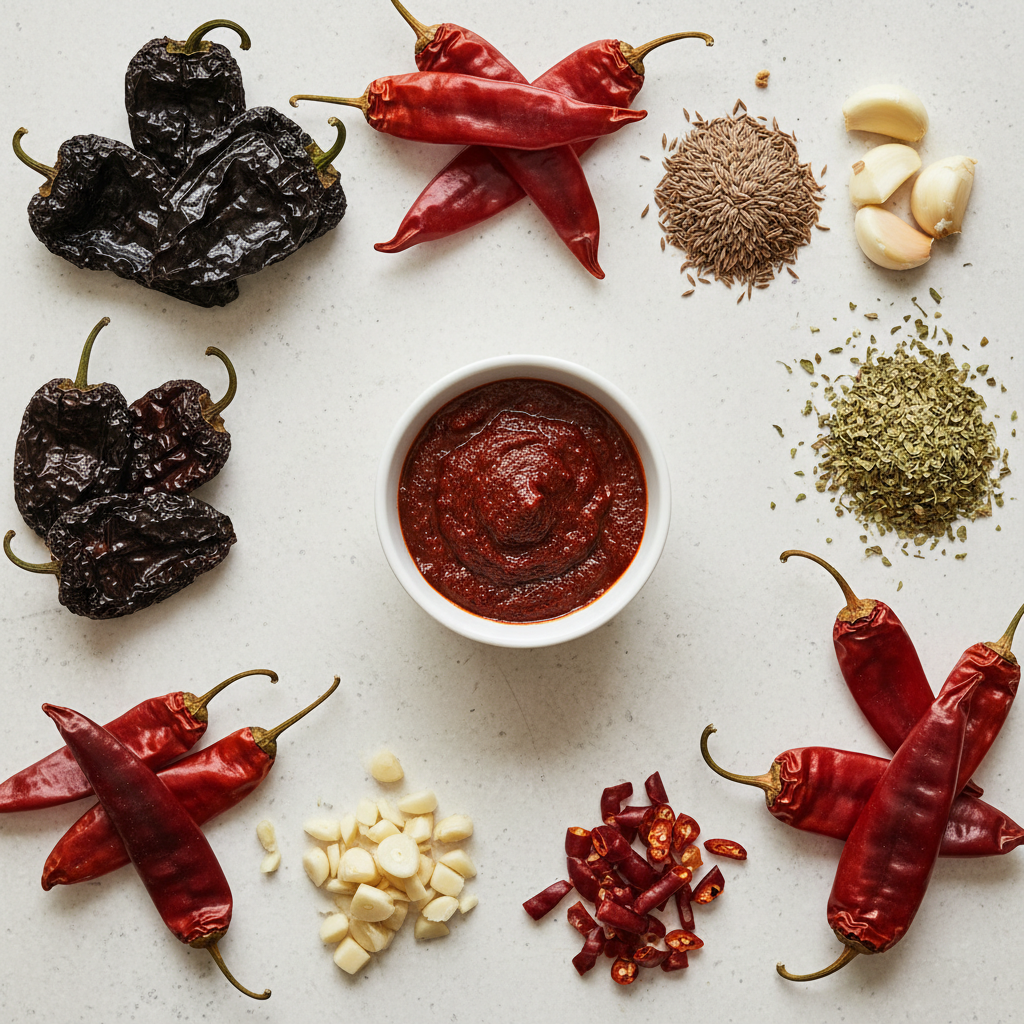
- Dried chiles (ancho + guajillo are a friendly starting point)
- Beef broth or stock (low-sodium helps you control salt)
- Tomato paste (small amount for body, not “tomato soup”)
- Cumin, oregano, black pepper
- Salt
- Neutral oil or beef tallow
Optional, but commonly worth it
- Masa harina (corn flour) for thickening and a subtle corn aroma
- Apple cider vinegar or lime juice (a small splash at the end wakes everything up)
- Chipotle powder for smoke, cayenne for heat
- Dark beer or coffee (a little can deepen bitterness and roast notes, if you like that style)
Quick self-check: what kind of chili maker are you today?
This sounds silly, but it saves batches. Pick the lane that matches your constraints, then cook accordingly.
- You want “competition-style” depth: use dried chiles, cube chuck, and simmer 2.5–3 hours.
- You want weeknight speed: use ground beef + good chili powder, simmer 45–60 minutes, thicken with masa.
- You want mild heat: lean on ancho and skip cayenne, add heat at the table with hot sauce.
- You want “Texas hot”: add arbol or cayenne, and don’t dilute with too much broth early.
If you’re cooking for a crowd with mixed spice tolerance, build flavor first, then keep the heat flexible. That usually lands better than trying to “fix” an over-spicy pot.
Step-by-step: Texas chili recipe with no beans
This method targets thick, chile-forward chili without relying on beans or a lot of tomato. If you do the browning well, you’ll taste it.
1) Make a quick chile paste (preferred for depth)
- Stem and seed 4–6 dried chiles (for example: 3 ancho, 3 guajillo).
- Toast them in a dry skillet 20–40 seconds per side, just until fragrant. Don’t scorch.
- Soak in hot water 15–20 minutes, then blend with a little soaking liquid, plus 2–3 garlic cloves and a pinch of salt.
If you’re skipping dried chiles, replace this paste with 3–5 tablespoons chili powder, added in the spice step below. It won’t be identical, but it can still make a satisfying pot.
2) Brown the beef like you mean it
- Pat beef dry, season lightly with salt and pepper.
- Brown in batches in a heavy pot (Dutch oven helps), using enough fat to prevent sticking.
- Don’t rush: you want dark edges, not gray steamed meat.
That brown layer on the bottom is flavor. You’ll dissolve it later and it becomes part of the sauce.
3) Build the base
- Sauté onion in the same pot until softened, then add garlic for 30 seconds.
- Stir in tomato paste and cook 1–2 minutes until it darkens slightly.
- Add cumin and oregano (and chili powder if using), stir until fragrant.
4) Simmer low and steady
- Return beef to the pot, add chile paste, then add broth until the meat is just barely covered.
- Bring to a gentle simmer, then keep it low, partially covered.
- Cook 2.5–3 hours for chuck, stirring occasionally. Add small splashes of broth if it tightens too much.
According to the CDC, cooling leftovers quickly helps reduce foodborne illness risk, so plan to portion and chill within a reasonable time after serving rather than leaving the pot out all evening.
5) Thicken without beans (the Texas way)
If your chili looks thin near the end, you have a few good options:
- Masa slurry: whisk 1–2 tablespoons masa harina with a little warm broth, stir in, simmer 10 minutes.
- Reduce: simmer uncovered 15–25 minutes, stirring more often.
- Fat check: if you used very lean beef, the mouthfeel can seem thin; a small spoon of rendered beef fat or neutral oil can round it out.
6) Finish for balance
- Taste for salt, then add 1–2 teaspoons vinegar or a squeeze of lime.
- Rest 15 minutes off heat if you can; the texture usually tightens and flavors settle.
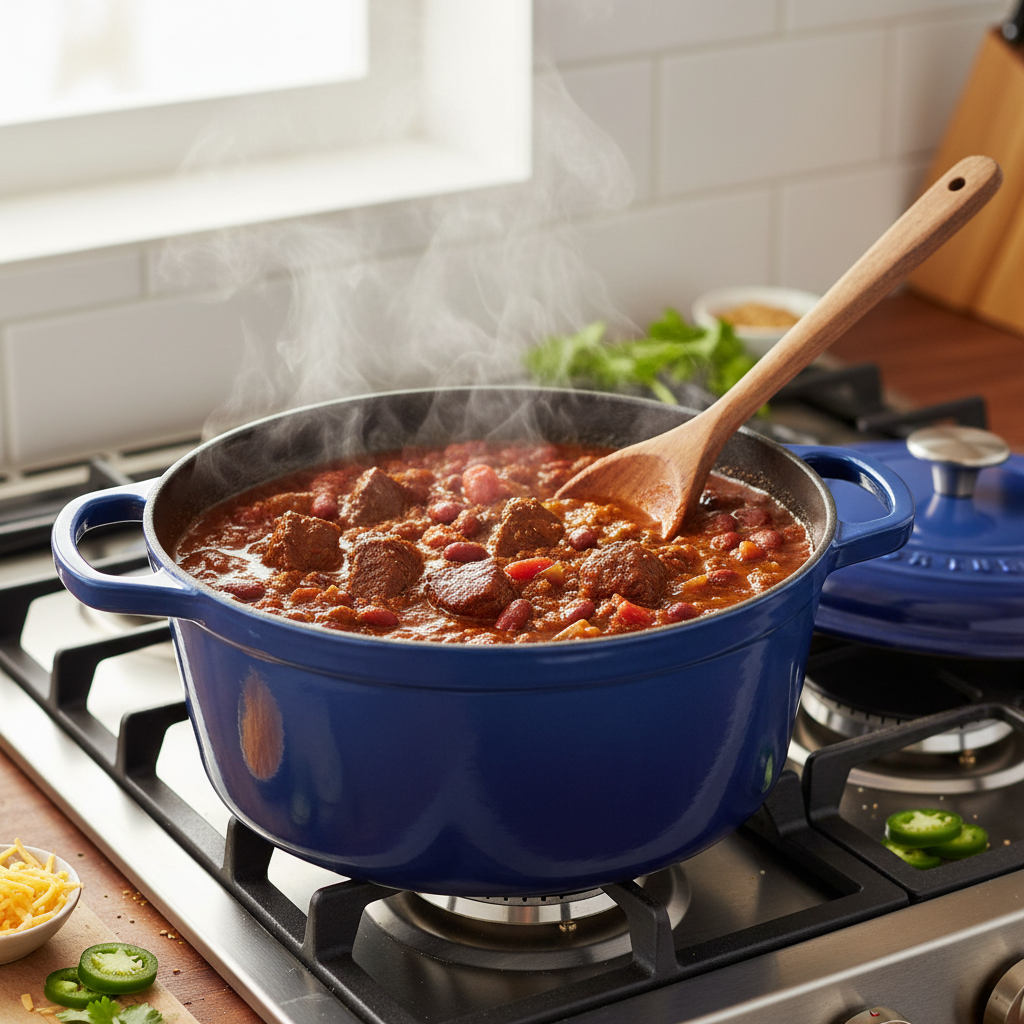
If you want toppings, keep them simple: diced onion, shredded cheddar, cilantro, sliced jalapeño. Cornbread on the side fits, even if the bowl stays bean-free.
Troubleshooting: why your chili might taste “off”
Most “meh” chili comes down to a few patterns, and they’re all fixable.
- Flat flavor: not enough salt, not enough chile, or no acid at the end. Adjust salt first, then add a touch of vinegar or lime.
- Bitter edge: scorched spices or burnt chiles. Toast quickly, and cook tomato paste/spices over medium, not high.
- Watery texture: too much broth early or simmered too gently. Reduce uncovered, or use a small amount of masa.
- Tough beef: simmer not long enough, or boiling too hard. Keep it low; give chuck time to relax.
Timing and adjustments table (so you can plan)
Use this as a quick guide when you’re deciding between cubed chuck and ground beef, or when you’re scaling the pot for game day.
| Goal | Best beef choice | Typical simmer time | Thickening move |
|---|---|---|---|
| Deep, classic Texas bowl | Chuck cubes | 2.5–3 hours | Reduce + optional masa |
| Weeknight chili | Coarse ground beef | 45–60 minutes | Masa slurry |
| Lean and lighter | Lean ground beef or bison | 60–75 minutes | Masa + careful fat balance |
| Make-ahead for a crowd | Chuck cubes | 3 hours + reheat | Reduce after reheating |
Practical tips that make this taste like “Texas”
Here are the moves I’d prioritize if you only have the energy for a few upgrades.
- Use dried chiles at least once. Even a simple ancho-guajillo blend teaches you what “chile-forward” really tastes like.
- Brown in batches. Crowding the pot is the fastest way to lose depth.
- Go easy on tomatoes. Tomato paste adds body, but too much pushes it into spaghetti-sauce territory.
- Finish with acid. A small splash at the end can make the whole pot feel more “alive.”
- Let it rest. The pot often tastes better after 15 minutes, and even better the next day.
Conclusion: your next pot should be bolder and thicker
A good texas chili recipe without beans comes down to three habits: build chile flavor, brown the beef properly, and control thickness with reduction or masa instead of dumping in extra tomato. If you do those, the pot usually takes care of itself.
Action ideas: if you’re cooking this week, try the ancho-guajillo paste once, then keep everything else simple. If you already love your current chili, keep your recipe but add the “finish” step, salt check plus a tiny splash of vinegar or lime, and see how much brighter it tastes.
FAQ
What is the most authentic meat for a Texas chili recipe?
Chuck roast is a common choice because it turns tender with a long, gentle simmer and stays beefy. Brisket can be great too, but it’s easier to overpay or overcook if you’re not used to it.
Can I make Texas chili with ground beef and still keep it “Texas-style”?
Yes, especially for a weeknight version. Keep the no-beans structure, use a chile-forward seasoning, and thicken with reduction or masa so it eats like chili, not meat sauce.
How do I thicken chili without beans or flour?
Reduction is the cleanest method: simmer uncovered and stir. Masa harina is also traditional in many kitchens and adds a subtle corn note without tasting like flour.
Why does my chili taste bitter after I add spices?
Bitterness often comes from spices or chiles scorching in the pan. Keep heat moderate and stir constantly when blooming spices; if bitterness remains, a small amount of acid and a salt adjustment can soften it.
Is a Texas chili recipe supposed to include tomatoes?
Some versions use none, others use a little. Tomato paste in a small dose is a practical compromise for body, but if you want a more old-school profile, lean on chiles and broth instead.
How spicy should Texas chili be?
It varies a lot by cook and region. A smart approach is building flavor with mild chiles first, then adding heat with cayenne, arbol, or hot sauce so people can adjust their bowls.
Can I make this in a slow cooker?
Usually yes, but still brown the beef and cook the aromatics first, then transfer. Slow cookers don’t reduce well, so plan to thicken at the end with a short uncovered simmer or a small masa slurry.
How long can chili sit out at a party?
Food safety depends on temperature control; many home cooks keep chili hot in a slow cooker on “keep warm” or “low,” and refrigerate leftovers promptly. If you’re unsure for your setup, check guidance from public health authorities or ask a food safety professional.
If you’re trying to dial in your own texas chili recipe style, keep notes on three things each time: which chiles you used, how dark you browned the beef, and how you thickened the pot. That little log saves a lot of guesswork and gets you to “your” version faster.