
Air fryer recipes can feel almost too easy—right up until your first batch comes out dry, uneven, or weirdly pale. If you’re new, you don’t need fancy tricks, you need a small set of reliable methods: how to preheat (or not), how to size your pieces, and how to avoid the “crowded basket” problem.
The good news is the air fryer is forgiving once you learn a few patterns. Most beginner wins come from the same habits: pat food dry, add a little oil (yes, even in an air fryer), cook in a single layer, and flip or shake when it matters.
This guide gives you a starter playbook: a quick “cook this, not that” table, five go-to beginner recipes, plus troubleshooting that actually matches real kitchen mistakes. You’ll also see safety notes where they matter, because burnt smoke and undercooked chicken are not part of the learning curve anyone wants.
What beginners usually get wrong (and how to fix it fast)
Most first-timer issues aren’t about the recipe, they’re about airflow. Air fryers cook by circulating hot air, so anything that blocks air slows browning and can leave cold spots.
- Overcrowding: If food overlaps, expect steaming. Cook in batches and keep a single layer whenever possible.
- Skipping a quick dry: Moisture prevents crisping. Pat proteins and veggies dry with paper towels.
- No oil at all: A teaspoon or two helps browning and keeps spices from tasting dusty.
- Wrong cut size: Tiny pieces burn before the center warms, big chunks brown outside but stay raw inside.
- Forgetting to shake/flip: Even strong air circulation has “hot zones.” A mid-cook shake helps.
According to USDA, you should verify doneness for poultry with a food thermometer (165°F). If you don’t own one yet, it’s a small upgrade that saves a lot of guesswork.
A quick time-and-temp cheat sheet (use this as your starting point)
Air fryer brands vary, and “400°F” on one machine can cook like “380°F” on another. Treat the table below as a baseline, then adjust by 2–4 minutes as you learn your model.
| Food | Temp | Typical Time | Beginner Tip |
|---|---|---|---|
| Chicken tenders (breaded) | 390°F | 10–14 min | Spray lightly with oil, flip halfway |
| Salmon fillet | 400°F | 7–10 min | Cook skin-side down, don’t overdo |
| Broccoli florets | 375°F | 8–12 min | Small oil + salt, shake twice |
| Frozen fries | 400°F | 12–18 min | Don’t thaw, shake often |
| Roasted chickpeas | 380°F | 10–15 min | Dry well, cool to crisp |
Key takeaway: if something browns too fast, drop the temperature 15–25°F and add a couple minutes. If it stays pale, raise the temp slightly and reduce crowding.
A simple self-check before you cook (30 seconds)
If you want consistent results with air fryer recipes, do these quick checks before you hit Start.
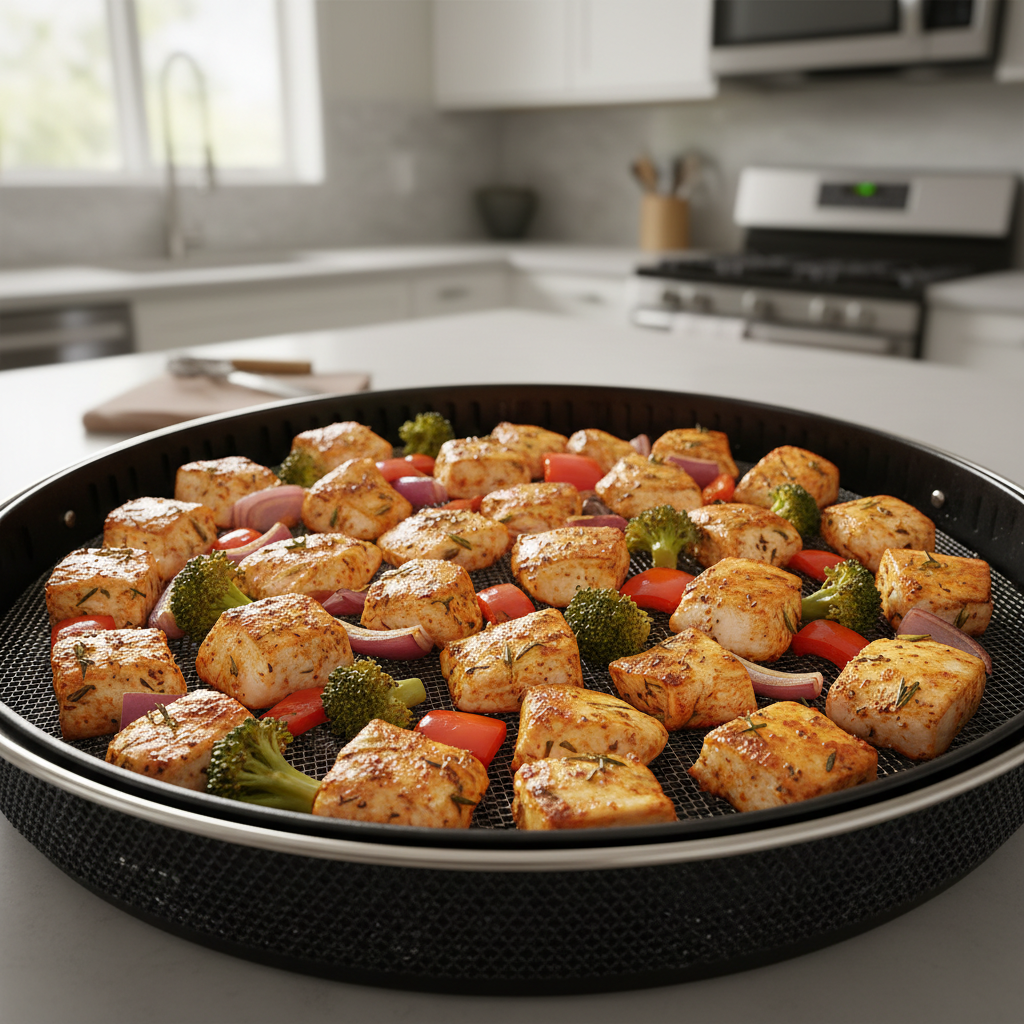
- Basket space: Can you see the bottom grid between pieces?
- Moisture: Did you dry the surface, especially for potatoes and chicken?
- Oil plan: Do you have a teaspoon of oil or a quick spray for browning?
- Seasoning timing: Will spices burn at high heat (garlic powder can)? Add delicate seasonings near the end.
- Doneness tool: For meat, is a thermometer available? If not, cut and check, and cook longer if needed.
If you’re thinking, “This feels picky,” that’s fair. But this is the stuff that separates “air fryer hype” from “why didn’t I buy this sooner.”
5 easy air fryer recipes beginners can repeat
Each option below uses common grocery items, minimal prep, and a straightforward cooking window. If your unit runs hot, start at the lower end of the time range.
1) Crispy chicken tenders (no deep fryer vibe, no drama)
- Ingredients: chicken tenders, salt, pepper, paprika, panko (or crushed cornflakes), 1 egg, a little oil spray
- Method: season chicken, dip in egg, coat in crumbs, arrange in one layer
- Cook: 390°F for 10–14 min, flip halfway
- Done when: juices run clear and center reaches safe temp (USDA recommends 165°F for poultry)
If crumbs look dry after flipping, a quick spray helps browning without turning it greasy.
2) Lemon-pepper salmon (weeknight fast, still feels “real dinner”)
- Ingredients: salmon, lemon zest or wedges, lemon pepper seasoning, salt, a drizzle of oil
- Method: season, place skin-side down
- Cook: 400°F for 7–10 min
Many people overcook salmon because they wait for it to “look done.” Pulling it slightly earlier can keep it moist, but food safety and personal comfort matter—if unsure, cook a bit longer and consult a professional source for guidance.
3) Parmesan green beans (the vegetable that converts skeptics)
- Ingredients: green beans, oil, salt, pepper, grated parmesan
- Method: toss beans with oil and seasonings
- Cook: 380°F for 7–10 min, shake once
- Finish: add parmesan in the last 1–2 minutes
Putting cheese in from the start often leads to burnt bits on the basket, save it for the end.
4) “Real” crispy potatoes (not soggy, not burned)
- Ingredients: Yukon gold or russet potatoes, oil, salt, smoked paprika (optional)
- Prep: cut into 3/4-inch chunks, rinse quickly, pat very dry
- Cook: 400°F for 16–22 min, shake 2–3 times
If you want extra crunch, let the potatoes sit 2 minutes after cooking. The surface firms up as steam escapes.
5) Crispy chickpeas for salads and snacking
- Ingredients: canned chickpeas, oil, salt, cumin or chili powder
- Prep: rinse, dry aggressively (this is the whole trick)
- Cook: 380°F for 10–15 min, shake a couple times
They crisp more as they cool, so don’t judge straight out of the basket.
Practical workflow: how to meal-prep with an air fryer without chaos
The air fryer is great for small batches, but it’s easy to bottleneck your dinner if everything needs the basket at once. A simple workflow makes it feel smooth.
- Cook “holdable” items first: potatoes, roasted veggies, chickpeas can sit 5–10 minutes without falling apart.
- Protein second: chicken and fish taste best right after cooking.
- Use warm oven holding: if you have batches, keep finished food warm at 200°F on a sheet pan.
- Season in layers: a little before cooking, then a small finishing pinch after.
Small habit that helps: write down the time/temp that worked once. Your future self will thank you, especially when you’re hungry and impatient.
Common air fryer mistakes (and what to do instead)
- Mistake: Using wet marinades like a slow cooker. Better: pat dry, then use a dry rub or a thick glaze at the end.
- Mistake: Cooking light foods (tortillas, cheese slices) uncovered. Better: weigh them down with a rack or add later.
- Mistake: Lining the basket with parchment too early. Better: add parchment only once food is on it, so it doesn’t fly into the heater.
- Mistake: Expecting battered foods to behave like deep frying. Better: use breading (panko) or an air-fryer-friendly coating.
According to FDA, you should avoid cross-contamination by keeping raw meat separate from ready-to-eat foods and washing hands and surfaces after handling raw proteins. In practice, that means separate tongs and a quick counter wipe before you start plating.
When to look up brand-specific guidance (or ask a pro)
If you’re cooking for someone with medical dietary needs, severe food allergies, or you’re unsure about safe internal temperatures, it’s worth slowing down and checking a trusted source or consulting a qualified professional.
- New to cooking chicken, turkey, or reheating leftovers and worried about safety
- Trying to adapt baking recipes, especially with raw batter or loose parchment
- Noticing persistent smoke, burning smells, or unusual device behavior
Also check your manufacturer manual for your exact model, especially around preheating and maximum fill levels. Real-world differences between units are normal.
Conclusion: your beginner plan for better results this week
If you only take two things from this, let it be this: give your food space, and don’t skip the dry-and-oil step. Those two moves make most air fryer recipes taste like you meant to do it.
Pick one recipe above, cook it twice in the next week, and jot down the time that worked in your kitchen. That repetition is what turns “new gadget” into “default dinner tool.”
FAQ
What are the best air fryer recipes for absolute beginners?
Start with foods that are forgiving and easy to see: frozen fries, green beans, chicken tenders, and salmon. They teach timing, shaking, and browning without complicated prep.
Do I need to preheat an air fryer?
Many models cook fine without preheating, but preheating can improve browning for breaded foods and steaks. If your manual recommends it, follow that; otherwise, add 1–3 minutes to the cook time when starting cold.
Why is my food not getting crispy?
The usual culprits are moisture and crowding. Pat food dry, cook in a single layer, and use a small amount of oil. If it’s still pale, increase temperature slightly and keep the batch smaller.
Can I use aluminum foil or parchment paper in the basket?
Often yes, but do it carefully. Make sure it’s weighed down by food and not blocking airflow, and don’t put loose parchment in an empty basket where it can lift into the heating element.
How do I avoid drying out chicken in the air fryer?
Use evenly sized pieces, don’t run the temperature too high, and pull the chicken once it reaches a safe internal temperature. A thermometer helps more than any “minutes per side” rule.
Is it safe to cook raw meat and vegetables together?
It can be, but it’s easy to get wrong. If you cook them together, keep pieces similar in size and ensure meat reaches a safe temperature; many people prefer cooking veggies separately to avoid undercooked protein and cross-contamination risk.
How should I clean my air fryer so it doesn’t smell?
Clean the basket and tray soon after cooking (once cool enough to handle), and wipe the interior if grease splattered. Odors often come from old oil residue, so a quick, consistent cleanup beats occasional deep scrubs.
If you’re currently collecting air fryer recipes but still feel unsure about timing, batch size, or what to cook first, it may help to build a small “starter rotation” and refine it based on your exact model and your weeknight schedule.