
how to make gulab jamun easy milk is mostly about removing the fussy parts: no complicated dough, no guesswork on syrup, and a frying method that keeps the centers soft instead of dry.
If you’ve tried gulab jamun before, you might know the pain, balls crack in oil, the inside stays raw, or the syrup tastes flat. The “easy milk” approach usually means using milk powder and milk to build a tender dough quickly, while still getting that classic, fragrant soak.
I’ll walk you through what matters in a US kitchen, what to buy, what to watch for, and how to fix common issues without turning this into a weekend project.
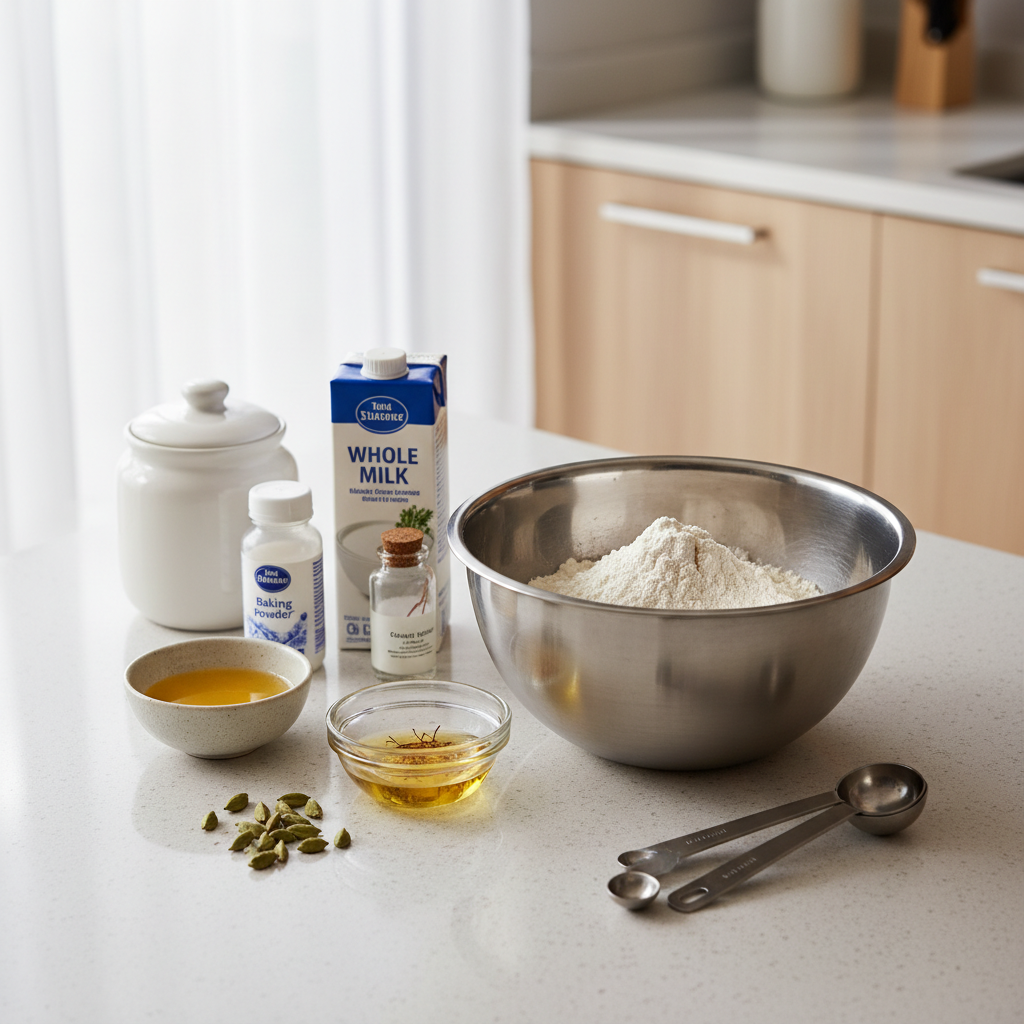
What “easy milk” gulab jamun really means
In many home recipes, “easy” gulab jamun swaps traditional khoya (milk solids) for milk powder plus a little milk or cream. You still get a dairy-forward flavor, but the dough comes together faster and ingredients are easier to find in the US.
It also leans on two techniques that matter more than brand or exact grams: gentle dough handling and low, steady frying. If either goes wrong, the syrup can’t save the texture.
Ingredients and smart substitutions (US-friendly)
Here’s a practical list with swaps that usually work. Exact amounts vary by recipe, but the roles stay the same.
- Milk powder: Full-fat tends to give a richer bite. Nonfat can work, but the jamun may feel less tender.
- All-purpose flour: Just enough to bind. Too much makes the center bready.
- Ghee: Adds flavor and tenderness. Unsalted butter can work in a pinch, though taste shifts a bit.
- Leavening: A small pinch of baking powder, too much can cause cracking or hollow centers.
- Milk: Added gradually. If your dough looks dry, add by teaspoons, not splashes.
- Sugar for syrup: Regular granulated sugar is fine.
- Flavorings: Cardamom is the baseline, rose water is optional, saffron is nice if you have it.
- Oil for frying: Neutral oil works well. Some people mix oil with a spoon of ghee for aroma.
Safety note: You’ll be working with hot oil and hot syrup. Keep kids/pets away from the stove area, and use a deep, stable pot to reduce splatter risk.
Quick table: ratios and texture cues you’re aiming for
You don’t need to obsess over a single “correct” number, but you do need good visual cues. Use this as a calibration guide.
| Component | What you want | Red flag | Quick fix |
|---|---|---|---|
| Dough | Soft, smooth, holds shape when rolled | Cracks while rolling | Add 1 tsp milk, rest 5–10 min |
| Dough | Not sticky, not dry | Very sticky, smears on hands | Rest 10 min, dust tiny bit milk powder |
| Oil temp | Low to medium-low, steady bubbling | Fast browning in 30–60 sec | Lower heat, wait 2–3 min before continuing |
| Sugar syrup | Warm, thin, fragrant | Thick or stringy syrup | Add warm water, re-warm gently |
Step-by-step: how to make easy milk gulab jamun at home
how to make gulab jamun easy milk becomes straightforward when you treat it like a timing recipe: syrup first, dough second, fry slow, soak warm.
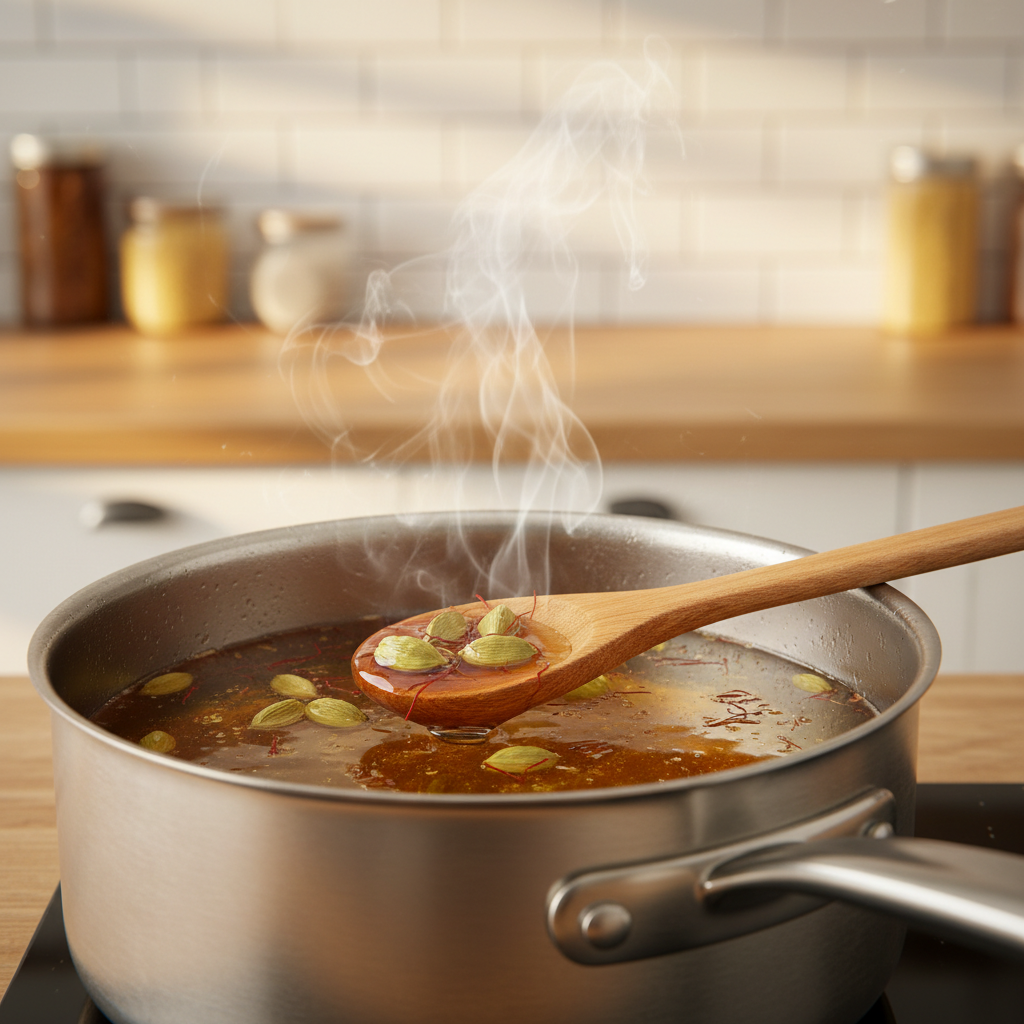
1) Make the syrup (start here)
Combine sugar and water in a saucepan and bring to a gentle simmer. Add crushed cardamom, and if you like, a few saffron strands. Turn off heat once sugar dissolves and the syrup stays thin.
Rose water can go in at the end, off heat. Too much can taste perfumey, so start small.
2) Mix the dough gently
In a bowl, combine milk powder, a small amount of flour, a pinch of baking powder, and a little ghee. Mix until it looks like damp sand, then add milk gradually until the dough just comes together.
Stop as soon as it becomes smooth. Overworking can make it tight, and tight dough tends to crack while frying.
3) Rest, then roll smooth balls
Rest the dough 10 minutes, covered. Then grease your palms lightly and roll small, smooth balls. If you see surface cracks, fix them now by re-rolling gently with a touch more moisture.
A realistic goal for even cooking is smaller pieces, think marble-to-walnut size rather than big golf balls.
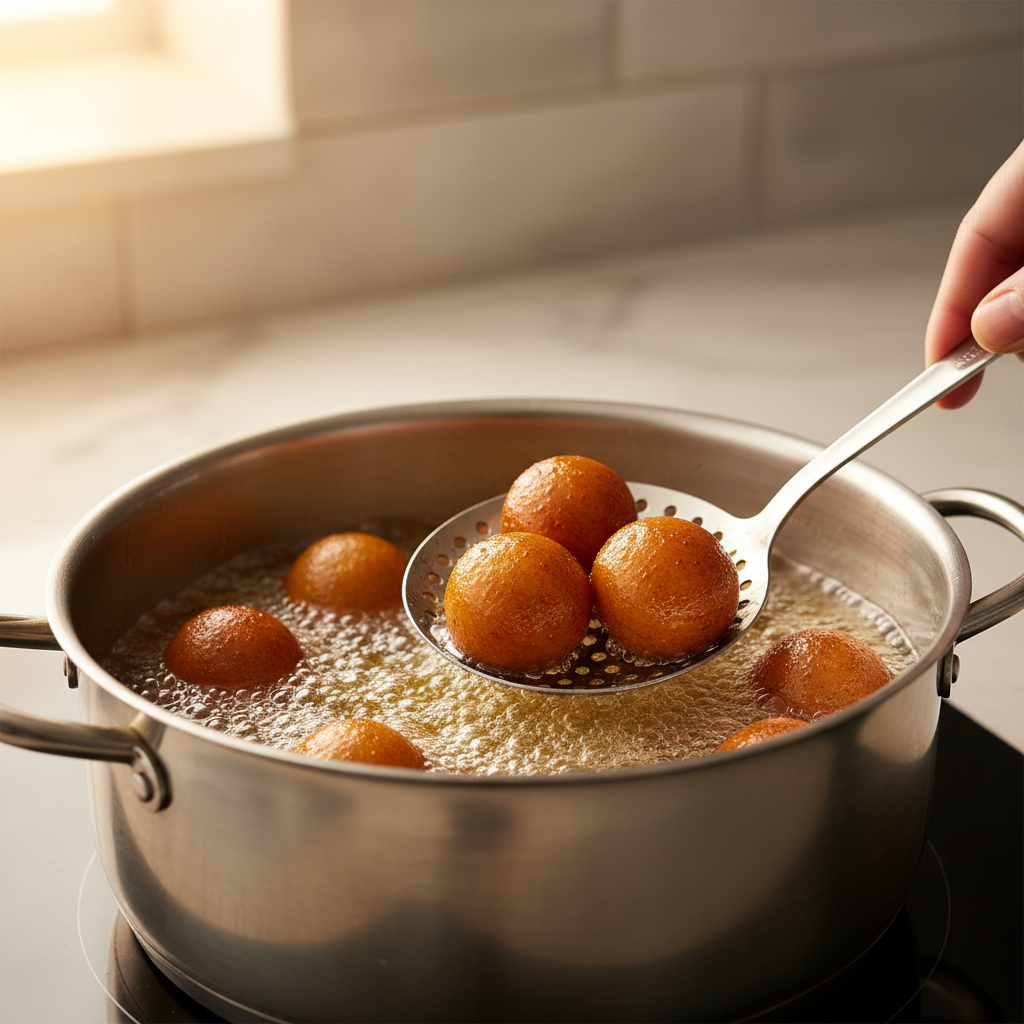
4) Fry low and slow
Heat oil in a deep pot to low or medium-low. Add a test crumb of dough: it should rise slowly with steady bubbles, not instantly brown.
Fry in small batches, rotating the balls so color develops evenly, aiming for a deep golden brown. Rushing the heat is the fastest way to get a dark outside and undercooked center.
5) Soak at the right temperature
Add hot fried jamun into warm syrup, not boiling. Let them soak at least 1–2 hours for the classic juicy texture.
If you prefer them very soft, keep the syrup warm for the first 10 minutes, then let everything sit.
Fast self-check: why your gulab jamun fails (and what it usually means)
- Cracking in oil: Dough too dry, too much flour, or heat too high.
- Hard center: Oil too hot or balls too big, sometimes both.
- Hollow inside: Too much baking powder or oil temp swings.
- Not soaking syrup: Syrup too thick/cold, or jamun cooled too much before soaking.
- Greasy mouthfeel: Oil not hot enough, or overcrowding drops temperature.
According to USDA Food Safety and Inspection Service (FSIS), hot oil can cause severe burns quickly, so using a deep pot and avoiding overcrowding helps reduce splatter and sudden bubbling.
Practical tips that make a bigger difference than fancy ingredients
These are the small moves that usually separate “okay” from “why is this so good.”
- Keep syrup thin: Gulab jamun drinks syrup best when it’s light. If it thickens, loosen with warm water.
- Roll smoother than you think: Tiny surface cracks often turn into big tears in oil.
- Control heat, don’t chase color: If the batch browns too fast, pull the pot off heat briefly, then continue.
- Warm syrup, warm jamun: Hot-on-cold slows absorption. Warm-on-warm is forgiving.
- Plan for soak time: They taste “done” after resting, not right after frying.
Make-ahead, storage, and serving ideas (US kitchen reality)
If you’re cooking for guests, this dessert is friendlier than it looks. Make it earlier, let it soak, and rewarm gently.
Make-ahead
- Make syrup up to 2–3 days ahead, store covered in the fridge, rewarm before soaking.
- Fry jamun the same day for best texture, then soak and hold at room temp for a few hours.
Storage
- Refrigerate in syrup in an airtight container. Texture stays good for a few days in many cases.
- Reheat gently in microwave or on low heat with a splash of water if syrup thickens.
Serving
- Serve warm with a spoon of syrup.
- Pair with vanilla ice cream if you like that hot-cold contrast.
- Add chopped pistachios or almonds for crunch.
If you have dietary restrictions or medical nutrition concerns, it’s smart to check with a clinician or dietitian, this dessert is sugar-forward and portion size matters for many people.
Key takeaways (so you don’t reread the whole thing)
- Thin, warm syrup beats thick syrup every time for absorption.
- Soft dough + resting reduces cracks and keeps centers tender.
- Low, steady frying is the real secret behind soft gulab jamun.
- Soak time is part of cooking, not an optional extra.
Conclusion: your next batch will be better with two habits
how to make gulab jamun easy milk comes down to consistency: keep the syrup light and warm, then fry slowly enough that the inside cooks before the outside turns deep brown. Once you do those two things, the rest becomes personal preference, more cardamom, a touch of rose, slightly smaller pieces, and so on.
Try one small batch as a “calibration run,” take notes on dough feel and oil heat, then make the full batch right after. That alone saves a lot of frustration.
FAQ
- Can I make gulab jamun with milk powder and no flour?
Some recipes go very low-flour, but a small amount often helps binding. If you skip it entirely, the dough may feel fragile and crack during frying. - Why did my gulab jamun turn hard after soaking?
Usually oil ran too hot, which sets the outside early and dries the interior. Next time, lower heat and fry longer, then soak in warm (not cold) syrup. - What oil temperature is best for frying gulab jamun?
A low to medium-low temperature is typical. If they brown in under a minute, the oil likely runs too hot for even cooking. - Can I bake gulab jamun instead of frying?
Baking can work as a lighter approach, but texture and flavor differ, and soaking may be less even. If you try it, watch dryness and keep syrup thin. - How do I know my sugar syrup is correct for gulab jamun?
It should look like sweetened water, aromatic, and not form strings between fingers. If it thickens, loosen with warm water and rewarm gently. - My gulab jamun balls cracked while rolling, what should I do?
Add milk in tiny amounts, cover and rest the dough, then re-roll with lightly greased palms. Cracks you see now almost always get worse in oil. - Can I freeze gulab jamun?
Many people freeze fried (unsoaked) jamun successfully, then thaw and soak in warm syrup. Freezing soaked jamun can be mushier after thawing.
If you’re trying to get this dessert right for a party, or you’d rather avoid the trial-and-error on oil temperature, consider using a reliable gulab jamun mix plus the syrup and frying cues above, you still get that homemade feel, just with fewer moving parts.