
Mushroom soup recipe searches usually come from one place: you want something cozy and creamy, but you don’t want a fussy, restaurant-only process.
This version stays simple, uses everyday ingredients, and still tastes like it simmered all afternoon, even if you start after work.
I’ll walk you through how to build deep mushroom flavor, how to keep the soup silky without it turning gluey, and a few easy variations if you’re dairy-free or trying to add protein.
What makes a creamy mushroom soup actually taste “rich”
Most “meh” mushroom soups miss one step: they don’t give the mushrooms enough time in the pan. Mushrooms hold a lot of water, and if you rush, you steam them instead of browning them, that’s where the flavor lives.
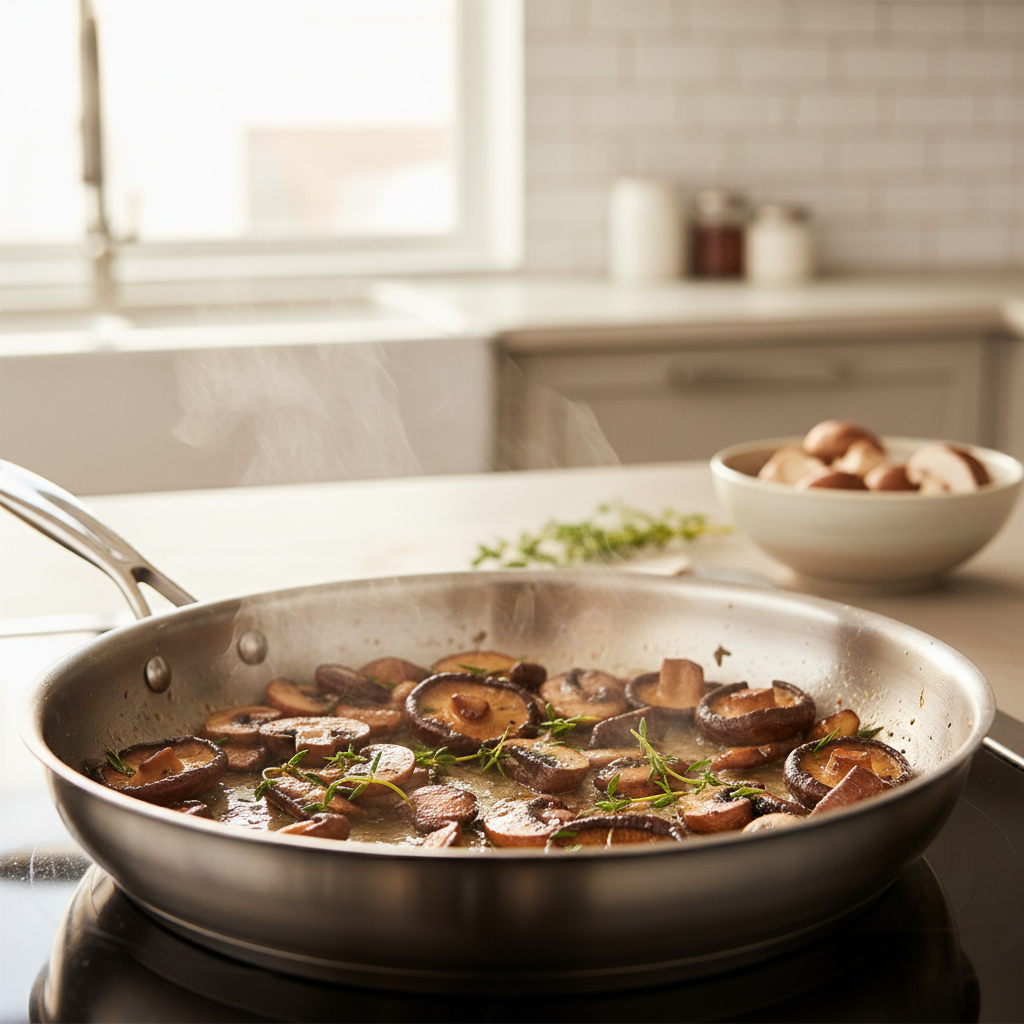
Another common issue is thickening too aggressively. A heavy hand with flour can mute the mushroom aroma and make the texture pasty. The goal is silky, spoon-coating, not “gravy in a bowl.”
And one more: salt timing. If you salt mushrooms too early, they can dump water fast. Many cooks get better browning by waiting until the mushrooms start taking on color, then seasoning.
Ingredients (with smart swaps that still work)
This list is flexible. The core idea is mushrooms + aromatics + broth + a gentle thickener + creaminess at the end.
- Mushrooms: cremini (baby bella) for everyday flavor, plus optional shiitake for depth
- Fat: butter, olive oil, or a mix
- Aromatics: onion or shallot, garlic
- Thyme: fresh or dried (a small amount goes far)
- Flour: all-purpose for classic body, or gluten-free 1:1 blend
- Broth: chicken or vegetable
- Creaminess: heavy cream, half-and-half, or full-fat coconut milk
- Finishers: black pepper, a squeeze of lemon, parsley
According to USDA FoodData Central, mushrooms contribute B vitamins and minerals like selenium and potassium, but the “healthy” part of this soup still depends on portion size and how much cream and salt you use.
Quick planning table: choose your texture and richness
If you’ve made a mushroom soup recipe before and it felt too thin or too heavy, this table helps you dial it in without guessing.
| Goal | What to do | What to avoid |
|---|---|---|
| Extra creamy (classic) | Use heavy cream, blend about half the soup | Boiling after adding cream |
| Lighter but still smooth | Use half-and-half or evaporated milk, blend 1/3 | Skipping browning step |
| Thicker, chowder-like | Add 1–2 diced potatoes, simmer until tender | Too much flour at the start |
| Dairy-free | Use olive oil + coconut milk or cashew cream | Sweetened coconut products |
Simple creamy mushroom soup recipe (step-by-step)
This makes about 4 bowls, scale up easily for meal prep.
1) Brown the mushrooms for real flavor
- Slice 1 to 1½ pounds mushrooms.
- Heat a large pot over medium-high, add 2 tablespoons butter or oil.
- Add mushrooms in a single layer as much as possible, let them sit a few minutes before stirring.
- Once you see browning, season with salt and pepper, cook until deep golden and the pan looks “dry.”
If the mushrooms release a lot of water, keep cooking. That evaporation is not wasted time, it’s the step that turns “mushroomy” into “wow.”
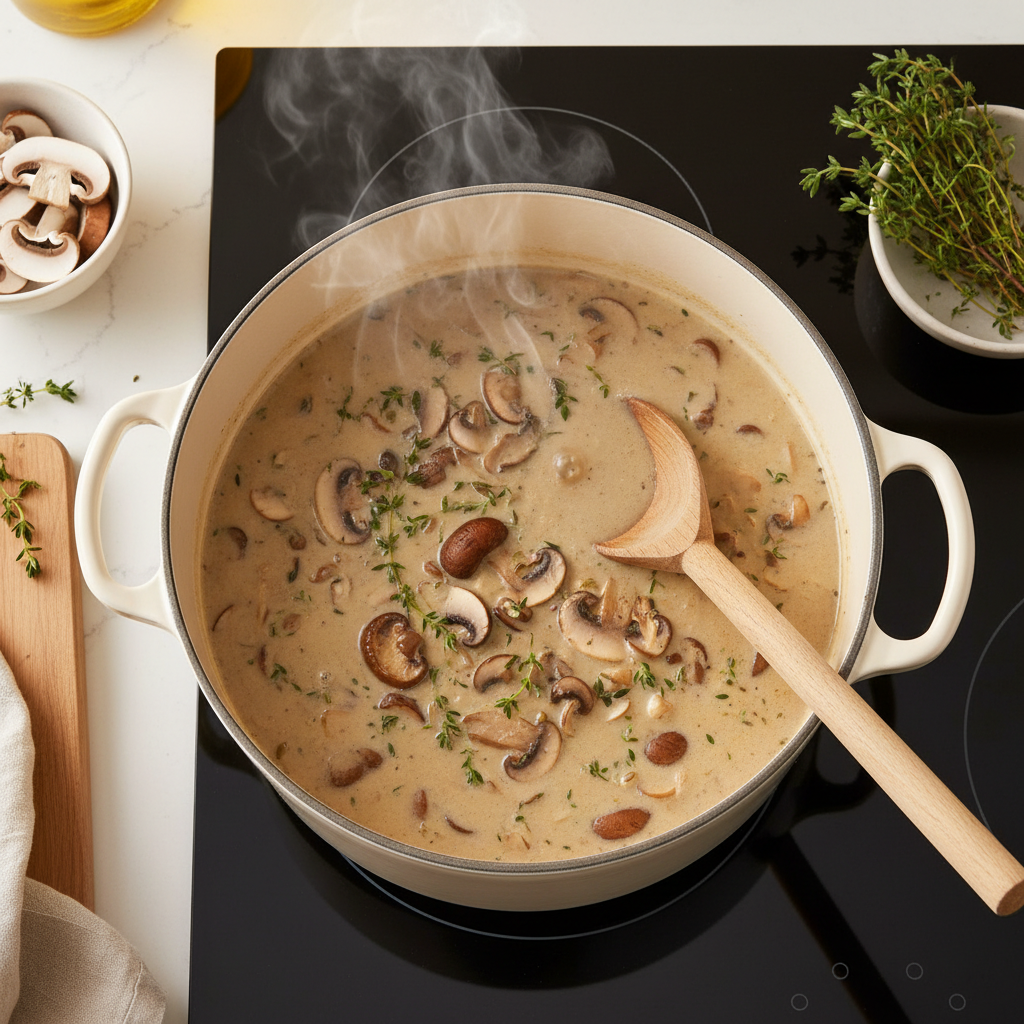
2) Build the base
- Lower heat to medium, add 1 chopped onion or 2 shallots, cook 3–5 minutes.
- Add 2–3 cloves minced garlic and 1 teaspoon thyme, cook 30 seconds.
3) Thicken gently
- Sprinkle in 2 tablespoons flour, stir until it disappears and smells lightly toasted, about 1 minute.
- Slowly pour in 4 cups broth, scraping the browned bits from the bottom.
4) Simmer, then blend (optional but recommended)
- Simmer 10–15 minutes, until flavors come together.
- Blend about half the soup for a creamy body while keeping some mushroom pieces.
Use an immersion blender right in the pot, or carefully transfer to a countertop blender in batches. If you use a blender, allow steam to vent so pressure doesn’t build.
5) Add creaminess at the end
- Turn heat to low, stir in ½ to ¾ cup heavy cream (or your swap).
- Taste and adjust: salt, pepper, and a small squeeze of lemon to brighten.
- Finish with chopped parsley if you have it.
Self-check: why your soup might not be working yet
If you’ve tried a mushroom soup recipe and it still feels flat, this quick checklist usually finds the culprit.
- No browning: mushrooms steamed because the pan was crowded or heat was too low
- Muted flavor: not enough salt, or broth is bland, or you skipped acidity at the end
- Too thick: too much flour, or you reduced too long after thickening
- Grainy texture: cream curdled from high heat, or coconut milk separated from boiling
- One-note taste: needs pepper, thyme, and a little allium sweetness from onion/shallot
Practical tips: make it ahead, store it, reheat without breaking
This soup is friendly for leftovers, but creamy soups can separate if reheated aggressively.
- Make-ahead: cook everything through the simmer step, then add cream after reheating for best texture.
- Fridge: store 3–4 days in a sealed container.
- Freezer: it can work, but dairy-based soups sometimes get slightly grainy. Many cooks freeze the base without cream, then add dairy later.
- Reheat: low to medium-low, stirring often, avoid a hard boil.
According to USDA Food Safety and Inspection Service, leftovers should be reheated until hot and steaming, and stored promptly after cooling, if you’re unsure about timing, it’s safer to be conservative.
Common mistakes (and what to do instead)
These are the “looks fine on paper, tastes wrong in the bowl” situations.
- Using only white button mushrooms: they work, but consider mixing in cremini or shiitake for a deeper flavor.
- Over-blending: if you want restaurant vibes, keep some texture, blend only part.
- Adding cream too early: add it at the end, keep heat gentle so it stays smooth.
- Skipping acid: a tiny bit of lemon or a splash of dry white wine can lift the whole pot.
Conclusion: the simplest way to get a “restaurant” bowl at home
A good mushroom soup recipe is less about fancy ingredients and more about a few decisions: brown the mushrooms until they actually color, thicken with a light touch, and finish with creaminess plus a little brightness. If you do those three, the soup usually takes care of the rest.
Tonight, pick one upgrade if you’re keeping it easy: either add a mixed mushroom blend, or blend half the pot for that creamy texture without extra dairy.
FAQ
How do I make this mushroom soup recipe thicker without adding more flour?
Blend a larger portion of the soup, or simmer a bit longer before adding cream. Another option is adding a small diced potato early and letting it cook down.
Can I use milk instead of heavy cream?
You can, but it’s more likely to look thin and can curdle if boiled. If you use milk, keep heat low and consider blending more soup for body.
What mushrooms taste best in creamy mushroom soup?
Cremini is a reliable base in most U.S. grocery stores. Adding some shiitake or portobello usually gives a deeper, more savory result.
Is it okay to make this mushroom soup recipe gluten-free?
Usually yes. Many people swap flour for a gluten-free 1:1 blend, or skip flour and use blending plus a little potato for thickness. If you have celiac disease, check labels on broth and blends.
Why did my creamy soup turn grainy?
Most often it’s heat. Cream and some dairy-free alternatives can separate when boiled. Reheat gently, and add cream at the end if possible.
Can I add chicken or sausage to make it a full meal?
Yes, cooked shredded chicken or browned sausage works well. Add it after simmering so it warms through without overcooking.
Do I need to wash mushrooms before cooking?
Many cooks wipe them with a damp paper towel. If you rinse quickly, dry well so they brown instead of steam.
If you’re trying to get this mushroom soup recipe into a reliable weeknight rotation, keep a “soup base” habit: brown mushrooms, simmer with broth, cool and store, then finish with cream or a dairy-free option right before serving, it’s a small workflow change that saves effort later.