
Gluten free pancakes can be fluffy, tender, and easy to flip, but only if the batter has the right structure and you treat it a little differently than wheat-based pancakes. If yours turn out gummy, gritty, or oddly dense, it’s usually not “because gluten-free,” it’s because the mix, moisture, and heat aren’t working together.
This guide walks you through a reliable fluffy recipe, plus the practical stuff that actually matters: what flour blend to use, why resting the batter changes everything, and how to fix common pancake failures without starting over. You’ll also get quick variations for dairy-free and egg-free needs, with a few guardrails if you’re cooking for someone with celiac disease.
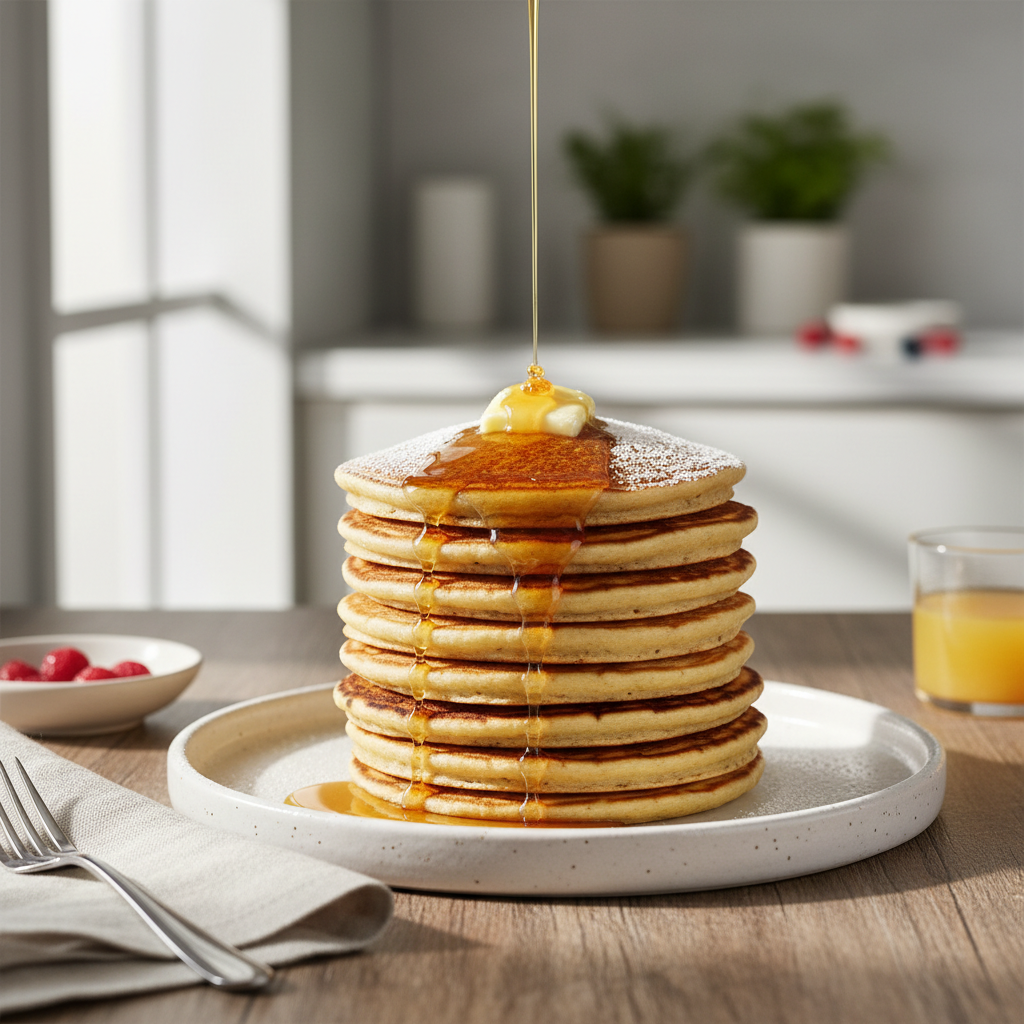
What makes gluten-free pancakes fluffy (and why they often aren’t)
Traditional pancakes lean on gluten for stretch, trapping bubbles from baking powder and steam. In gluten-free batter, that “net” is weaker, so you need a replacement strategy: a balanced flour blend, enough hydration, and a small amount of binder so bubbles stay put long enough to cook.
In real kitchens, the flat-pancake culprits are usually these:
- Flour blend too starchy, pancakes brown fast but stay dense inside.
- No binder (or not enough), so the center crumbles or tears during flipping.
- Batter too thin, it spreads wide and cooks like a crepe.
- Pan too hot, outside sets before the inside can rise.
- No rest time, gritty texture and weak lift because the flours never fully hydrate.
According to the U.S. Food and Drug Administration (FDA), “gluten-free” labeling has a specific meaning for packaged foods, but home cooking still depends on ingredient handling and cross-contact risk, especially for celiac disease. If you’re cooking for medical gluten avoidance, treat your tools and surfaces as part of the recipe.
Fluffy gluten free pancakes recipe (reliable, weekday-friendly)
This recipe aims for thick-but-pourable batter, a short rest, and enough lift for a genuinely fluffy stack. It works best with a 1:1 gluten-free baking flour that contains xanthan gum. If your blend doesn’t include a binder, see the note below.
Ingredients (makes about 8 medium pancakes)
- 1 1/4 cups (150g) 1:1 gluten-free flour blend
- 2 tbsp sugar (or 1 tbsp if you prefer less sweet)
- 2 tsp baking powder (aluminum-free if sensitive to taste)
- 1/2 tsp fine salt
- 1 large egg
- 1 1/4 cups milk (dairy or unsweetened non-dairy)
- 3 tbsp melted butter or neutral oil, plus more for the pan
- 1 tsp vanilla extract (optional, but helps)
Optional binder note
- If your flour blend has no xanthan gum, add 1/4 tsp xanthan gum to the dry ingredients. Many batches don’t need more than that.
Steps
1) Mix dry. In a medium bowl, whisk flour, sugar, baking powder, and salt until evenly combined.
2) Mix wet. In a second bowl, whisk egg, milk, melted butter (not scorching hot), and vanilla.
3) Combine gently. Pour wet into dry and stir just until you don’t see pockets of flour. A few small lumps are fine; overmixing makes pancakes tighter.
4) Rest the batter. Let it sit 10 minutes. This is where many gluten-free batters go from “meh” to fluffy because the flours hydrate and thicken.
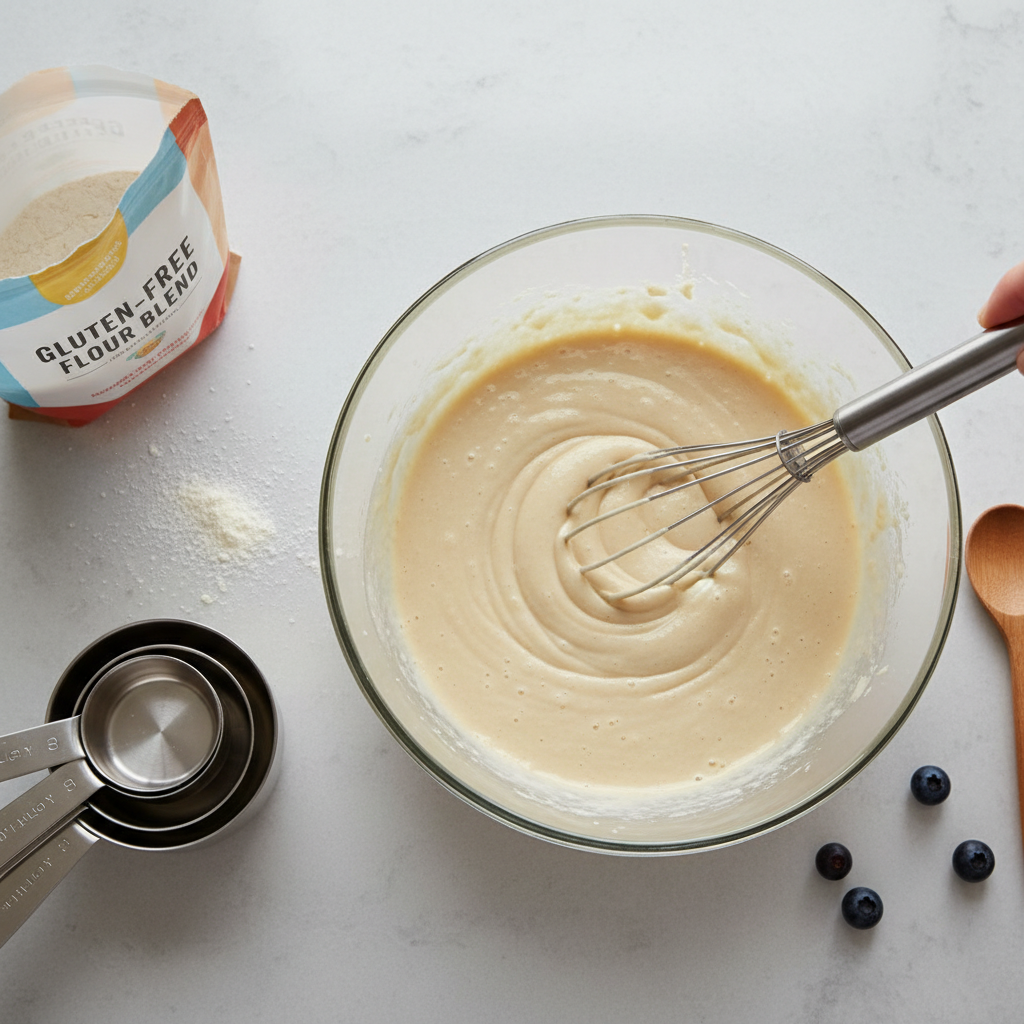
5) Preheat and grease. Heat a nonstick skillet or griddle to medium-low to medium. Add a thin layer of butter or oil.
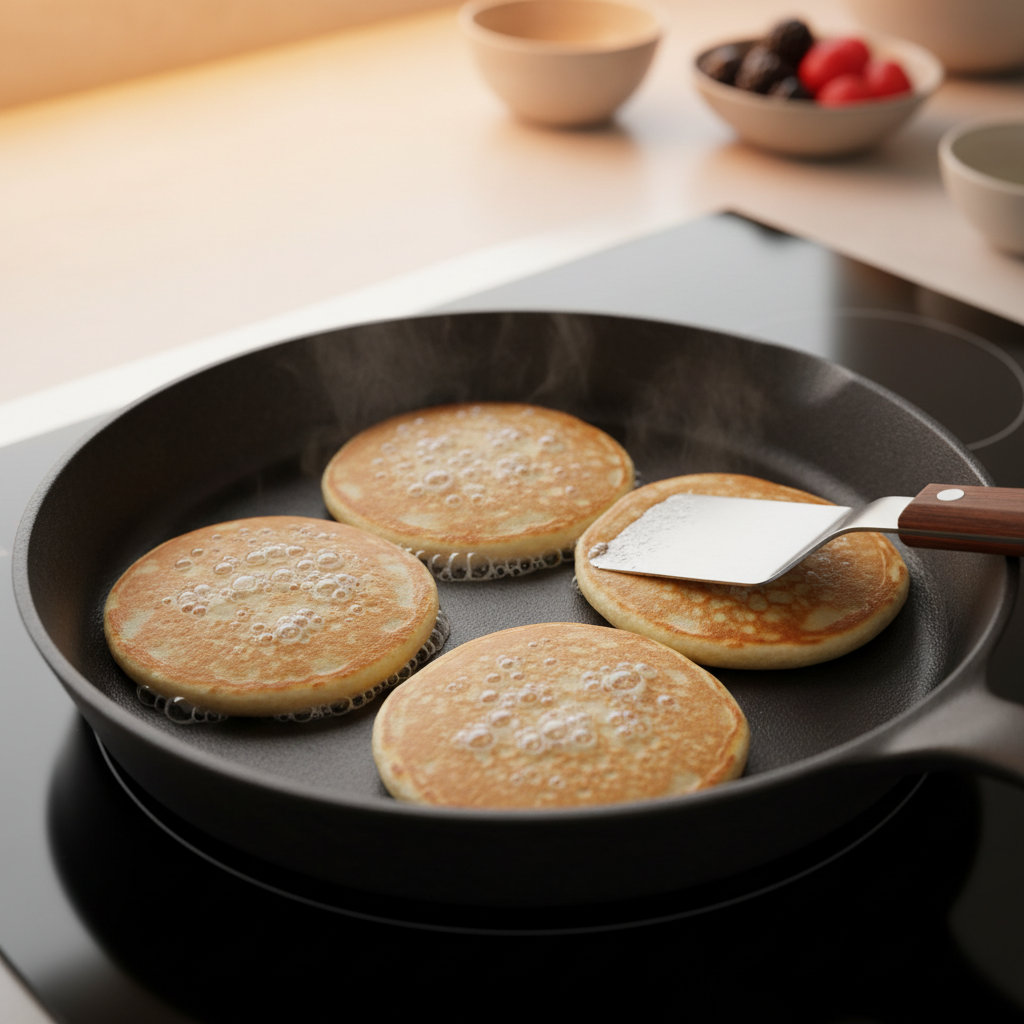
6) Cook patiently. Scoop about 1/4 cup batter per pancake. Cook until bubbles appear and the edges look set, usually 2–3 minutes. Flip once, then cook 1–2 minutes more.
7) Keep warm. Hold pancakes on a sheet pan in a 200°F oven while you finish the batch.
Quick self-check: your batter and pan in 60 seconds
If you want fluffy gluten free pancakes, these are the fast tells before you commit to cooking the whole bowl.
- Batter thickness: It should mound slightly on the spoon, then slowly pour. If it runs like heavy cream, add 1–2 tbsp flour. If it sits like frosting, add 1–2 tbsp milk.
- Rest test: After 10 minutes, batter should thicken a bit. If it gets gluey, your blend may be too starchy or has a lot of gums.
- Heat test: A drop of water should sizzle gently and evaporate, not snap-crackle aggressively.
- Flip readiness: Edges look matte and you see bubbles popping on top. If you flip earlier, tearing is common.
Flour blends that work (and when to adjust)
You can make great gluten-free pancakes with many blends, but the blend drives texture more than most people expect. If your results swing wildly from brand to brand, that’s normal.
| Blend type | What you’ll notice | Typical adjustment |
|---|---|---|
| 1:1 baking flour with xanthan gum | Most reliable rise and structure | Often none; don’t overmix |
| Rice flour–heavy blend | Can taste gritty if under-hydrated | Rest batter, consider slightly more fat |
| Starch-heavy blend (tapioca/potato) | Fast browning, sometimes gummy center | Lower heat, cook longer, reduce liquid a touch |
| Oat flour-based (certified GF oats) | Hearty, tender, less “bouncy” | Add a bit more baking powder if dense |
One more real-world note: if you use oats, choose certified gluten-free oats when gluten exposure matters. According to the National Celiac Association, oats can be cross-contaminated with wheat, barley, or rye unless handled carefully, and some people still react to oats even when certified, so it’s worth checking with a clinician if symptoms persist.
Make it your way: dairy-free, egg-free, and add-ins
You can usually keep the “fluffy” goal even with swaps, but each swap changes structure, so small adjustments help.
Dairy-free
- Use unsweetened almond, soy, or oat milk.
- Swap butter for neutral oil or dairy-free butter.
- If using very thin plant milk, batter may need 1–2 tbsp extra flour after resting.
Egg-free
- Try a flax egg: 1 tbsp ground flax + 3 tbsp warm water, rest 5–10 minutes.
- Expect slightly less loft and a softer set, keep pancakes a bit smaller for easier flipping.
Add-ins that won’t sink your pancakes
- Blueberries, mini chocolate chips, or chopped nuts, about 1/2 cup total.
- Sprinkle on top right after pouring batter instead of mixing into the bowl, this helps even distribution.
Troubleshooting: fix flat, gummy, or crumbly pancakes
If your gluten free pancakes aren’t fluffy, don’t toss the batter right away. A couple small moves usually rescue the batch.
- Too thin and spreading: Rest 5 more minutes, then stir in 1 tbsp flour at a time. Thin batter is the quickest path to sad, wide pancakes.
- Gummy center: Turn heat down and cook longer. If your blend is starch-forward, it often needs gentler heat to set through.
- Dry or gritty: Batter probably needed more hydration or rest. Add 1–2 tbsp milk and wait a few minutes.
- Cracking when flipped: Wait for edges to look matte and set. Also check if your blend lacks binder.
- No rise: Baking powder may be old. If it’s been open for months, replacing it can be the difference between flat and fluffy.
Key points that make a fluffy stack (pin this part)
- Rest the batter about 10 minutes so gluten-free flours hydrate.
- Medium-low heat beats high heat, especially with starch-heavy blends.
- Flip once, early flipping knocks out the lift.
- Use a balanced blend, and add a tiny amount of xanthan gum only when your flour lacks it.
- Adjust thickness after resting, not before.
Conclusion: fluffy gluten-free pancakes are mostly about technique
Once you stop treating gluten-free batter like wheat batter, fluffy results become pretty repeatable. Get the thickness right, give the flour a short rest, and cook a little slower than your instincts want, that’s the core.
If you want to act on this today, make one batch with a 1:1 blend you trust, then take notes on batter thickness and pan heat. Next weekend, you’ll be shocked how consistent your gluten free pancakes can be.
FAQ
Why are my gluten free pancakes dense even with baking powder?
Dense pancakes usually come from batter that’s too thick, overmixed, or cooked at heat that sets the outside too quickly. Resting the batter and lowering the pan temp often fixes the “heavy middle” problem.
Do I need xanthan gum for gluten-free pancakes?
Not always, many 1:1 blends already include it. If your flour has no binder, a small amount can improve structure and flipping, but too much may push the texture toward gummy.
Can I use almond flour only?
You can, but pancakes made with only almond flour tend to be softer and less bread-like, and they often need more egg for structure. Many people get fluffier results by blending almond flour with a starch or a 1:1 mix.
How do I know when to flip gluten-free pancakes?
Look for bubbles on the surface and edges that turn matte and set. If the top still looks wet and shiny, flipping usually causes tearing.
What’s the best milk for fluffy gluten-free pancakes?
Regular milk is straightforward, but unsweetened soy or oat milk also works well. Very thin plant milks may require a slightly thicker batter after resting.
How can I avoid cross-contact when cooking for celiac disease?
Use a clean pan, clean spatula, and separate butter jar and toppings if anyone double-dips knives. If symptoms or reactions are a concern, it’s reasonable to consult a healthcare professional for personalized guidance.
Can I make the batter ahead of time?
It’s possible, but many batters thicken a lot in the fridge, so you may need to thin with a splash of milk before cooking. For the fluffiest texture, mixing closer to cooking time tends to work better.
If you’re cooking for mixed diets at home and want a more predictable routine, it can help to pick one gluten-free flour blend you like, then dial in this recipe around that single bag, less guesswork, fewer “why is it different today?” mornings.