
Asparagus roasted is one of the quickest ways to turn a plain bunch of spears into a side dish that actually tastes like something, but most people get tripped up by two things, sogginess and burnt tips.
This garlic-forward version keeps it simple, hot oven, dry asparagus, enough oil to carry flavor, then garlic added at the right moment so it stays fragrant instead of bitter. You’ll also get a few “choose-your-own-path” options for thickness, doneness, and add-ons.
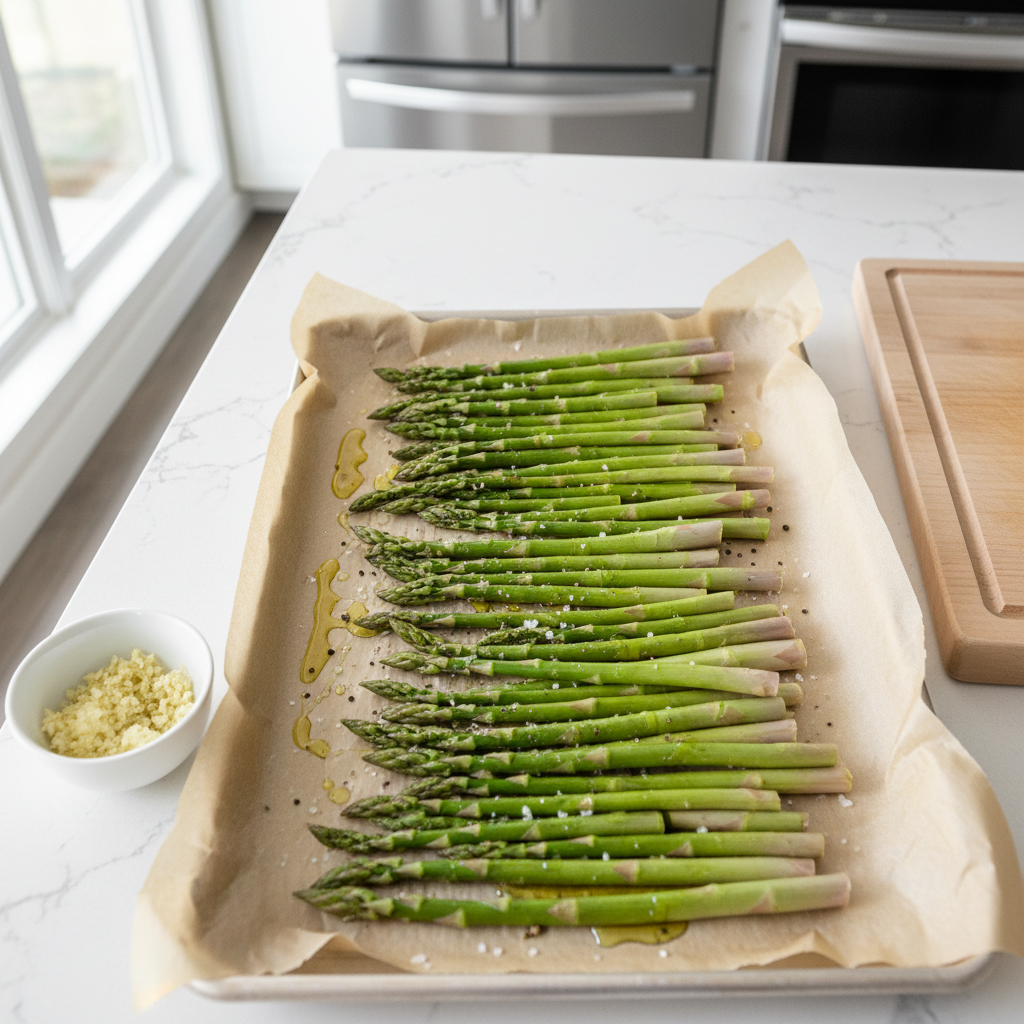
If you’re cooking for a weeknight, this is also a low-drama win: minimal prep, one pan, and it pairs with almost anything from salmon to pasta. The main “secret” is not a secret, it’s moisture control and timing.
Key takeaways: Roast hot, don’t crowd the pan, dry the spears well, and add garlic late or protect it with oil so it doesn’t scorch.
Why roasted asparagus turns out soggy (and how garlic can go wrong)
Most roasted vegetable disappointment comes down to steam. If the asparagus releases water and that water can’t evaporate fast enough, you’re basically steaming on a sheet pan.
- Wet spears: rinsed and tossed straight onto the pan, water clings and slows browning.
- Crowded pan: spears piled up trap moisture, tips soften fast.
- Oven not fully hot: a lukewarm start encourages steaming before searing.
- Garlic too early: minced garlic can burn at high heat, turning sharp and bitter.
According to USDA Food Safety and Inspection Service, perishable foods should not sit out at room temperature longer than 2 hours (or 1 hour in hot conditions), so keep your prep moving and refrigerate anything you’re not roasting right away.
Quick checklist: what kind of asparagus are you working with?
This step sounds picky, but it saves you from guessing cook time. Thickness matters more than people admit.
- Very thin spears: cook fast, tips burn easily, reduce time and watch closely.
- Medium spears: most “standard” bunches, easiest to roast evenly.
- Thick spears: need a bit longer, often benefit from peeling the lower stalk.
Simple self-test: bend one spear near the bottom. It usually snaps where the woody part begins. If your bunch feels extra fibrous, trim a little higher than you think.
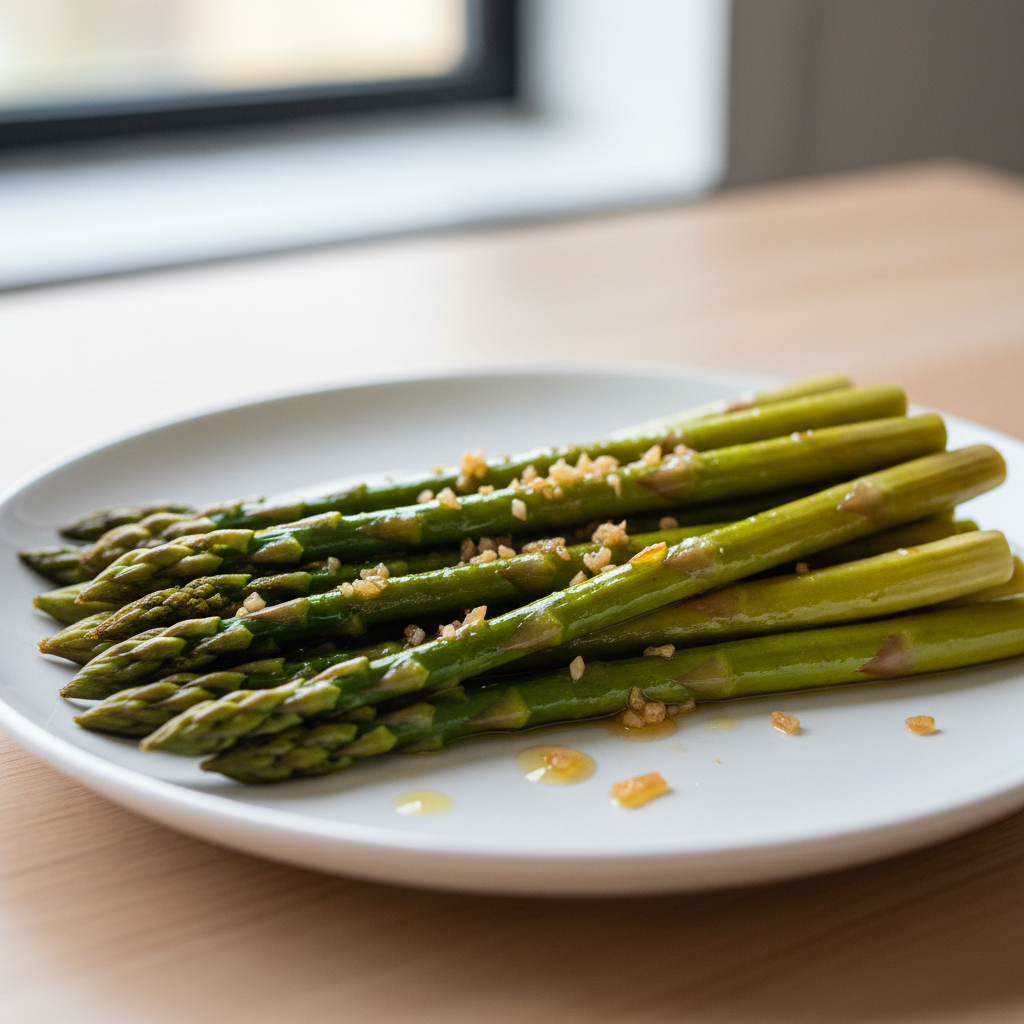
If you’re aiming for crisp-tender, you want the stalk to yield when bitten but not collapse. If you want softer asparagus for bowls or omelets, roast a touch longer, but don’t expect much browning.
Roasted asparagus recipe with garlic (the reliable version)
This is written for a standard home oven and a regular sheet pan. It scales up cleanly as long as you don’t crowd the asparagus.
Ingredients (serves 3–4 as a side)
- 1 lb asparagus, trimmed
- 1.5–2 tbsp olive oil
- 1/2 tsp kosher salt (adjust to taste)
- Black pepper, to taste
- 2–3 cloves garlic, finely minced or grated
- Optional: lemon zest or wedges, Parmesan, red pepper flakes
Method
- Heat the oven: 425°F. Give it time to fully preheat.
- Dry well: after washing, pat spears dry with a towel.
- Season: toss asparagus with oil, salt, and pepper directly on the sheet pan.
- Roast: spread in a single layer. Roast 8–12 minutes depending on thickness.
- Add garlic late: in the last 2–3 minutes, sprinkle garlic over the spears (or toss garlic with a teaspoon of oil first, then add).
- Finish: squeeze lemon, add zest, or shower with Parmesan while hot.
That “add garlic late” move is what keeps the flavor bright. If you love deeper, sweeter garlic, you can use thinly sliced garlic instead of minced, it tends to brown more gently, though it still needs watching.
Timing table: thickness, oven temp, and doneness
These ranges are realistic for most kitchens, but ovens vary. If your asparagus roasted results keep coming out uneven, use this as your starting point and adjust in 1–2 minute increments.
| Asparagus thickness | Oven temp | Roast time | Best visual cue |
|---|---|---|---|
| Thin | 425°F | 6–9 min | Tips just starting to brown |
| Medium | 425°F | 8–12 min | Spears bend slightly when lifted |
| Thick | 425°F | 12–16 min | Fork slides into stalk with light resistance |
| Any (extra browning) | 450°F | Reduce by ~1–3 min | More char at tips, watch closely |
Practical upgrades (choose one, don’t overdo it)
Garlic roasted asparagus can handle a little extra, but too many add-ons blur the flavor. Pick a direction.
Bright and fresh
- Lemon zest + a squeeze of lemon juice at the end
- Chopped parsley or dill
Savory and cheesy
- Parmesan or Pecorino (add right after roasting)
- A dusting of breadcrumbs toasted in olive oil, if you want crunch
Spicy and bold
- Red pepper flakes added with garlic
- A tiny drizzle of chili oil at the end (go easy)
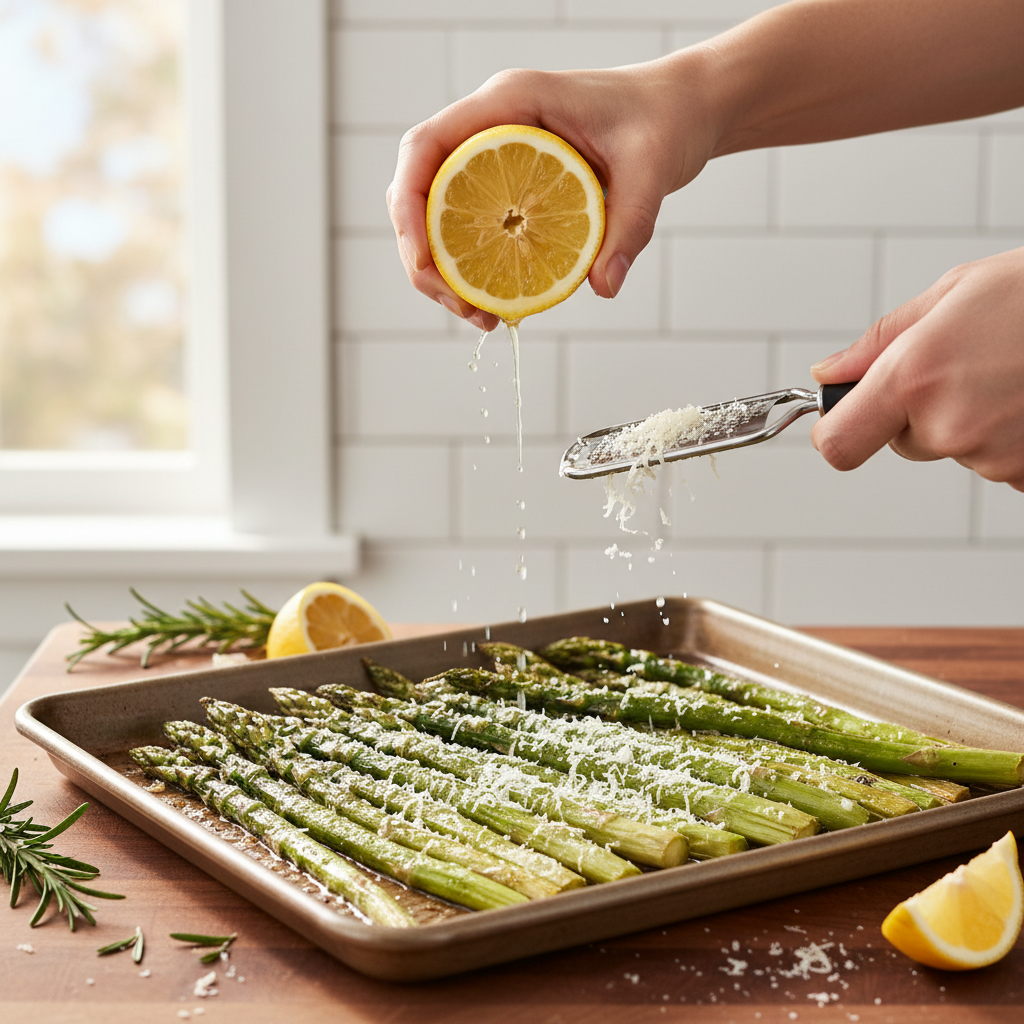
If you’re serving with steak or roasted chicken, the cheesy route usually lands well. For fish, lemon and herbs feel lighter and less competitive.
Mistakes that keep happening (even when the recipe is “right”)
- Using too little oil: asparagus needs enough fat to conduct heat and carry seasoning. Too little often equals dry stalks and pale color.
- Overcooking to “be safe”: asparagus goes from crisp-tender to stringy fast. If you’re unsure, start checking early.
- Forgetting salt timing: salting before roasting is usually fine, but if your spears seem watery, try salting right after roasting once or twice and compare.
- Burnt garlic: if you want heavy garlic flavor, consider garlic powder early + fresh garlic late, instead of piling on minced garlic at the start.
One more thing people don’t expect: thicker spears sometimes taste better roasted because they brown without turning into brittle sticks. Thin asparagus can be great, it just asks for more attention.
When to adjust for diet, allergies, or kitchen constraints
If you’re watching sodium, reduce salt and lean on lemon zest, pepper, and a little Parmesan for perceived saltiness. If you’re dairy-free, skip cheese and add toasted nuts or a splash of good vinegar at the end.
For garlic sensitivity, many people tolerate garlic-infused oil better than raw minced garlic, but reactions vary, so it may be worth checking with a medical professional if you have GI issues or food intolerances.
No oven, or it’s 95°F and you refuse to heat your kitchen? A hot cast-iron skillet works, but you’ll want to keep the asparagus moving and add garlic near the end for the same reason, it burns easily.
Conclusion: a simple sheet-pan side you’ll actually repeat
Asparagus roasted with garlic tastes “restaurant-y” when you treat moisture and timing as the real recipe, dry spears, hot oven, room on the pan, garlic added late so it stays aromatic.
Action ideas: try the base version once with no extras so you learn your oven timing, then next time add either lemon zest or Parmesan, not both, and see which direction you prefer.
FAQ
How do I keep roasted asparagus from getting limp?
Dry the spears thoroughly, roast at 425°F, and spread them out. Limp asparagus is often crowded-pan steaming rather than “bad asparagus.”
Can I roast asparagus ahead of time for meal prep?
You can, but texture will soften after chilling. For better results, under-roast slightly, then reheat quickly in a hot oven or skillet for a few minutes.
Should I peel thick asparagus before roasting?
Many thick spears have a tougher outer layer near the bottom. A light peel on the lower third can help, especially if the stalks feel fibrous when raw.
Is it better to use minced garlic or garlic powder?
Minced garlic gives a fresher bite but burns more easily. Garlic powder is more forgiving at high heat. A practical compromise is powder early, fresh garlic in the last few minutes.
What temperature is best for roasting asparagus?
425°F is a reliable middle ground for browning without scorching. If you push to 450°F for more char, reduce time and watch the tips closely.
Why are the tips burning before the stalks are tender?
That usually happens with thin spears or a very hot oven. Trim any very thin, wispy ends, roast a bit lower, or choose thicker asparagus for more even cooking.
Can I use frozen asparagus for this recipe?
It can work, but frozen asparagus releases more moisture, so browning is harder. Roast straight from frozen on a very hot pan and expect softer texture.
What main dishes pair well with garlic roasted asparagus?
It fits easily with salmon, chicken, steak, pasta, and grain bowls. If your main dish is rich, finish the asparagus with lemon to keep the plate from feeling heavy.
If you’re trying to make weeknight sides feel less repetitive, keep this roasted asparagus method as your “base,” then rotate one finishing move, lemon, Parmesan, or a little heat, and you’ll get variety without learning a new recipe every time.