
Argentinian empanadas are one of those foods that look simple until you try to make them at home and end up with leaky seams, dry filling, or a pastry that bakes up tough instead of tender.
The good news, you don’t need special equipment or a family recipe to get the classic results: juicy filling, a flaky-ish bite, and that recognizable half-moon shape with a neat repulgue crimp.
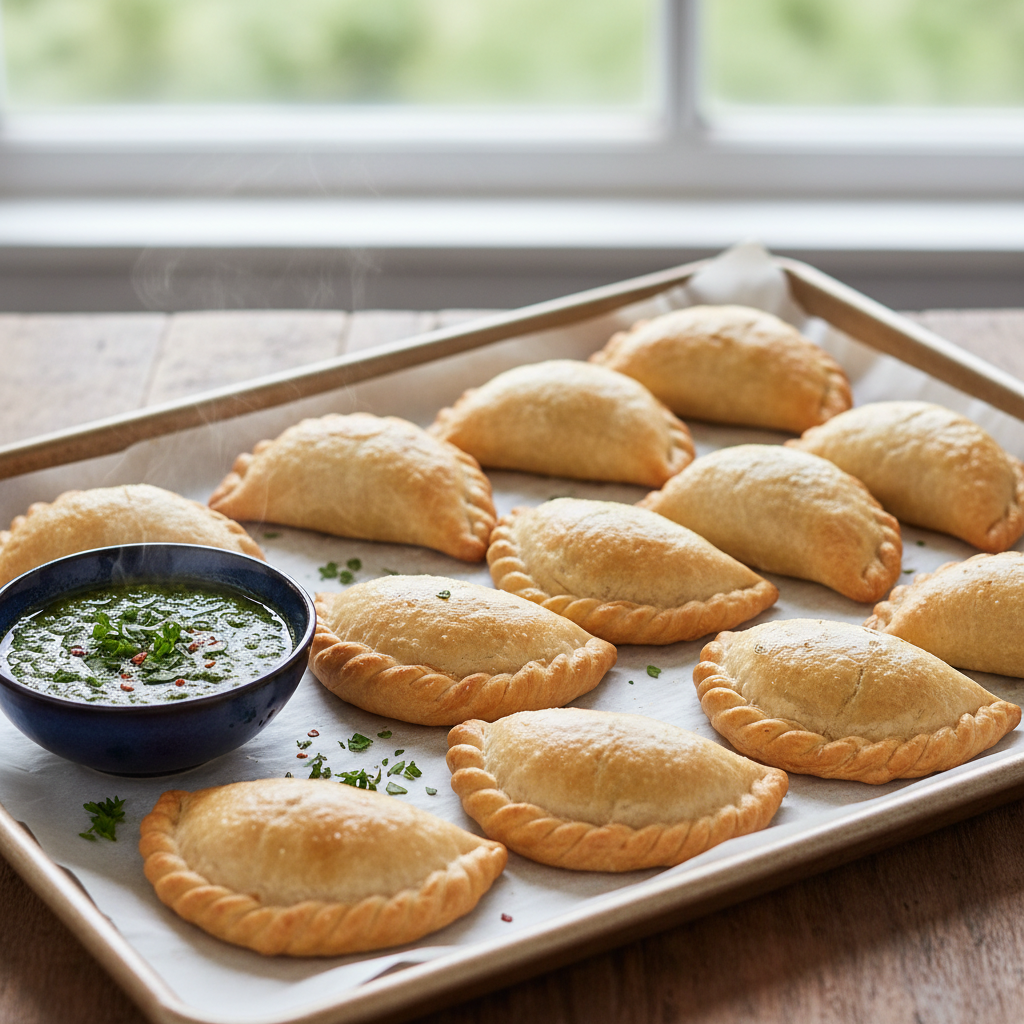
Below you’ll get a practical, American-kitchen-friendly approach: an easy beef filling, dough options (homemade or store-bought), sealing methods that actually hold, and a timing plan so you’re not stuck assembling while everyone waits.
What makes Argentine empanadas different (and why it matters)
In the U.S., “empanada” can mean a lot of things, from Caribbean-style dough to baked Latin American versions with all kinds of fillings. Argentine-style usually leans on a few recognizable traits.
- Baked is common, especially for home cooks, though many regions also fry.
- A savory, moist filling that’s cooked before stuffing, so the pastry doesn’t sit around waiting for raw meat to cook.
- Distinct folds (repulgue) that help sealing and sometimes identify fillings in a mixed batch.
Why you should care: once you respect moisture and fat balance in the filling, and you treat sealing like a real step (not an afterthought), most “empanada problems” disappear.
Ingredients and smart substitutions (U.S. grocery friendly)
You can make excellent argentinian empanadas with what most Americans can find at a standard grocery store. If you want to go more traditional, great, but it’s not required.
Classic beef filling (12–14 empanadas)
- 1 lb ground beef (80/20 works well)
- 1 large yellow onion, finely chopped
- 1 red bell pepper, finely chopped (optional, but adds sweetness)
- 2–3 cloves garlic, minced
- 1 tsp smoked paprika
- 1 tsp ground cumin
- 1–1.5 tsp kosher salt (adjust to taste)
- Black pepper
- 1–2 tbsp tomato paste (optional; use lightly)
- 1/2 cup beef broth or water (as needed)
- 2 tbsp chopped green olives (optional but very Argentine)
- 2 hard-boiled eggs, chopped (optional)
Dough options
- Empanada discs (frozen or refrigerated): easiest, most consistent.
- Pie crust: works in a pinch, but tends to puff and crack differently. Keep filling on the drier side.
- Homemade dough: best texture control, a little more time.
According to USDA Food Safety and Inspection Service (FSIS), ground beef should reach 160°F internal temperature for safety. Because the filling is cooked before assembly, you’re not guessing during baking.
Step-by-step: easy beef empanada filling that stays juicy
The biggest upgrade most home cooks can make is cooling the filling fully before assembling. Warm filling melts dough fat and creates steam pockets, which often leads to blowouts.
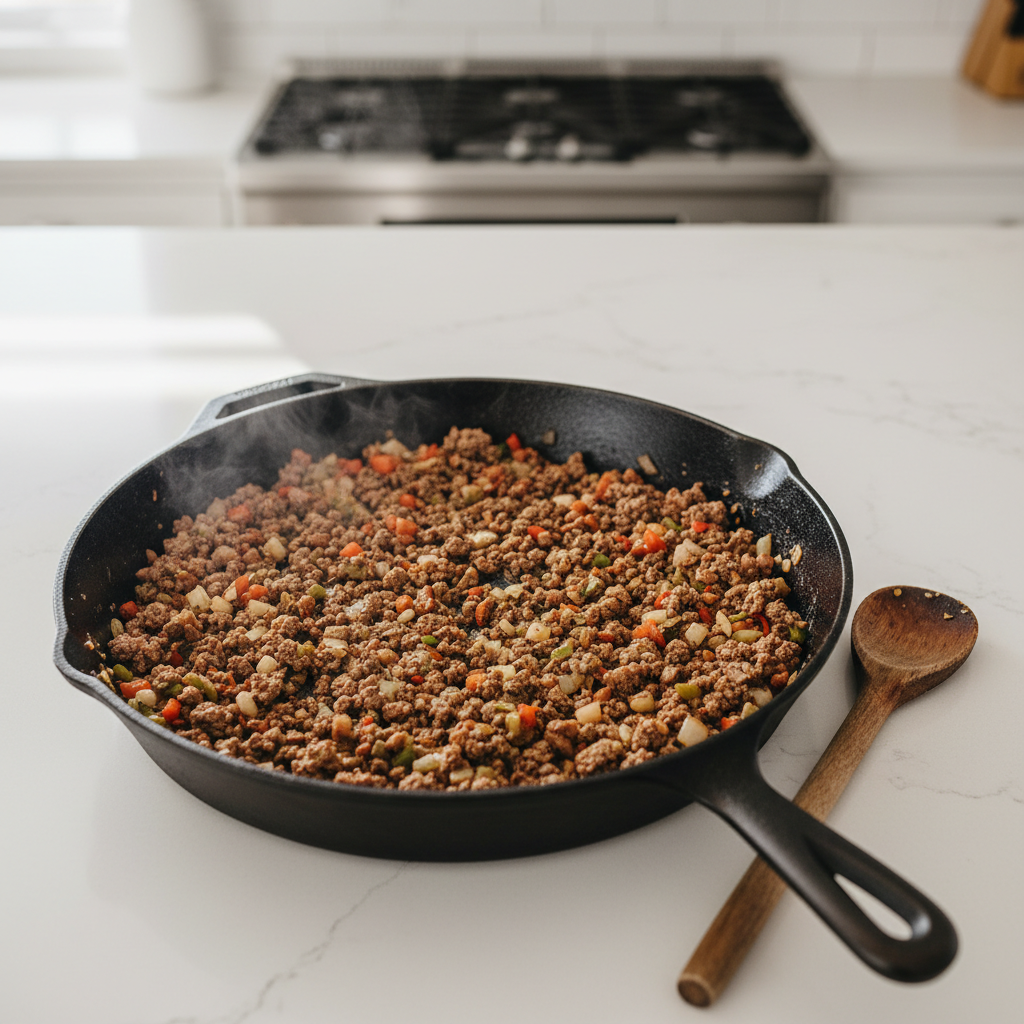
- Heat a skillet over medium heat, add beef and cook until browned, breaking it up.
- Add onion and bell pepper, cook until softened and fragrant.
- Stir in garlic, paprika, cumin, salt, pepper, and tomato paste (if using) for 30–60 seconds.
- Add a splash of broth or water, scrape up browned bits, and simmer 3–5 minutes.
- Taste and adjust seasoning, then fold in olives and/or chopped egg if you like.
- Cool completely in a wide dish in the fridge, at least 30–45 minutes.
If your filling looks “wet,” that’s not automatically bad. What you want is moist meat with very little free liquid pooling in the bowl.
Dough and assembly: seals that don’t pop open
Most blowouts come from two things: overfilling and weak sealing. Keep your portion consistent and treat the edge like a real seam.
Portion guide
- 4–5 inch discs: about 2 tbsp filling
- 6 inch discs: about 3 tbsp filling
How to assemble
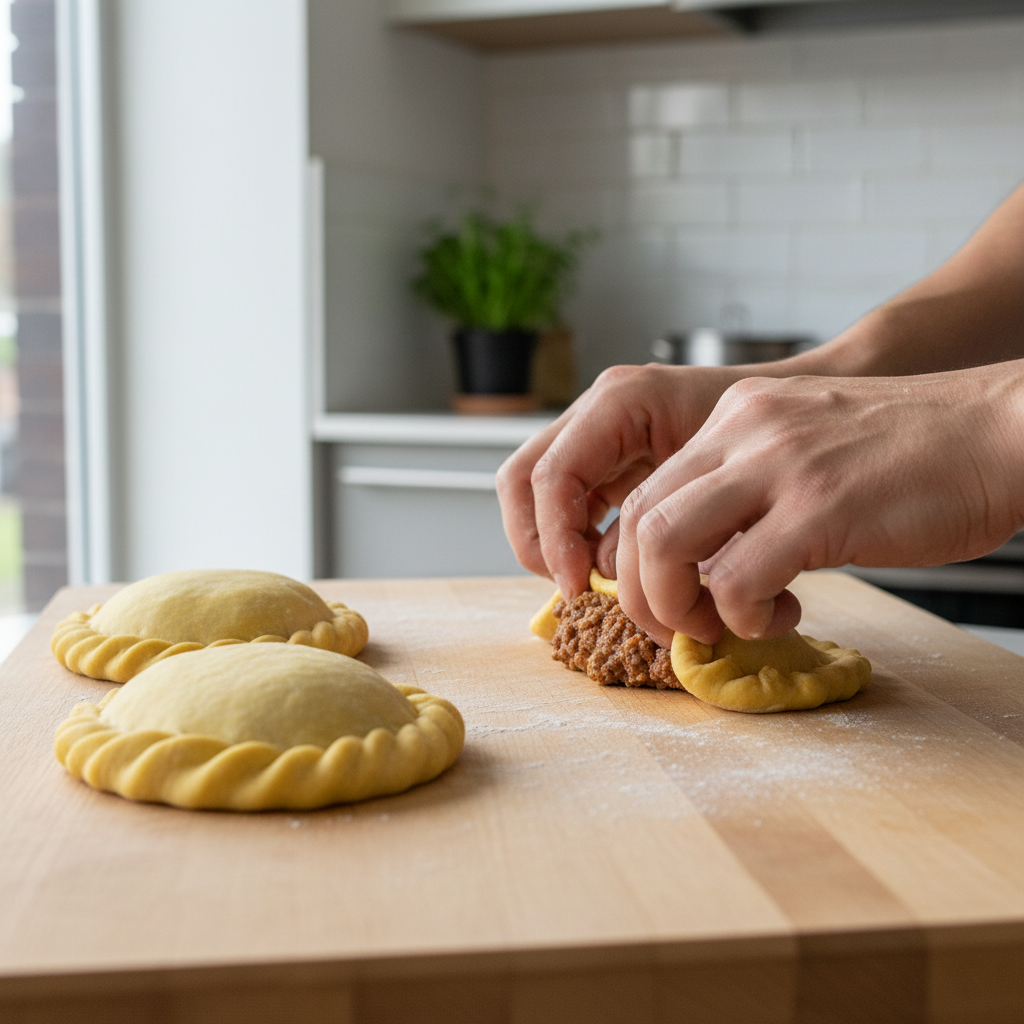
- Lay disc flat, spoon filling slightly off-center.
- Lightly moisten the edge with water (a fingertip is enough).
- Fold into a half-moon, press firmly to seal.
- Crimp with a fork, or do a simple repulgue fold (pinch and fold the edge over itself).
Key point: if you use a fork crimp, press the seam first with your fingers. Fork marks alone look nice but sometimes don’t seal well.
Bake or fry: timing, temperature, and a quick comparison
Baking is the easiest route for a full tray, and it still gives you that satisfying bite. Frying is delicious, but it’s messier and more sensitive to temperature swings.
| Method | Temp | Time | Texture | Best for |
|---|---|---|---|---|
| Bake | 400°F | 18–25 min | Golden, tender, slightly crisp edges | Batch cooking, less mess |
| Fry | 350°F oil | 3–5 min per side | Crisper, richer exterior | Small batches, extra crunch |
For baked empanadas: brush with egg wash (1 egg + 1 tbsp water) for color. Bake on a parchment-lined sheet, rotate once if your oven has hot spots.
Troubleshooting checklist (quick self-diagnosis)
If your last batch didn’t turn out, it usually points to one or two fixable issues. Here’s a fast way to pinpoint the culprit.
- Seams open: filling too warm, too much filling, or edges not pressed before crimping.
- Soggy bottoms: filling had excess liquid, tray overcrowded, or oven not hot enough.
- Tough dough: overworked homemade dough, too much flour during rolling, or overbaked.
- Dry filling: beef too lean, cooked too long, not enough onion/fat, skipped the short simmer.
- Bland flavor: under-salted filling, no browning, or spices added too late to bloom.
One more thing people don’t love hearing: if you rush assembly, you’ll pay for it at bake time. Cooling the filling feels slow, but it’s usually the difference between “okay” and “wow.”
Make-ahead, freezing, and serving ideas
Argentinian empanadas are naturally meal-prep friendly. The trick is freezing them in a way that keeps the seal intact.
- Make-ahead filling: cook up to 3 days ahead, store airtight in the fridge.
- Freeze unbaked: assemble, freeze on a tray until firm, then bag. Bake from frozen at 400°F, adding 5–8 minutes.
- Freeze baked: cool completely, wrap well. Reheat at 350°F until hot in the center.
Serving: keep it simple with chimichurri, salsa criolla, or even a tangy yogurt sauce if that’s what your fridge supports. A crisp salad on the side makes them feel like dinner, not just snacks.
Key takeaways (so you actually nail your next batch)
- Cook and fully cool the filling before assembling.
- Use a consistent portion size so seams don’t struggle.
- Press the edge to seal, then crimp for reinforcement.
- Hot oven, spaced-out tray, and egg wash = better color and texture.
Conclusion: a realistic path to “easy” empanadas
Once you treat moisture and sealing as the main game, argentinian empanadas stop feeling intimidating and start feeling like a flexible weeknight win. Pick the dough option that fits your schedule, keep the filling flavorful and cooled, and don’t overstuff.
If you want a simple next step, make the filling today, chill it, and assemble tomorrow. That one choice makes the whole process calmer, and the results usually taste more intentional.
FAQ
What are the most traditional fillings for argentinian empanadas?
Beef is the classic starting point, but you’ll also see ham and cheese, chicken, corn, and spinach. Many regions add olives and hard-boiled egg to beef, which gives that unmistakable Argentine vibe.
Can I use store-bought empanada discs in the U.S.?
Yes, and it’s often the most reliable choice for consistent thickness and baking. Just thaw as directed and keep them covered so the edges don’t dry out while you assemble.
Why do my empanadas leak in the oven?
Usually the filling is warm, too wet, or over-portioned. Cool the filling completely, drain off excess liquid if it pools, and seal by pressing the seam firmly before you crimp.
Should I bake or fry empanadas for the best flavor?
Frying can taste richer and crispier, but baking is easier for batches and still delicious. If you’re cooking for a group, baked is often the stress-free move.
How do I keep empanadas from getting soggy?
Make sure the filling has minimal free liquid, bake at a properly hot temperature, and avoid crowding the pan. If your oven runs cool, preheating longer can help more than you’d think.
Can I freeze empanadas before baking?
Yes, freezing unbaked works very well. Freeze on a tray first so they keep their shape, then transfer to a bag, and bake straight from frozen with a few extra minutes.
How do I know when baked empanadas are done?
Look for deep golden color on top and a set, browned bottom. If you’re unsure, open one and check that the center is hot and steamy; for meat fillings, food safety guidance still matters, and a thermometer can remove guesswork.
If you’re trying to get argentinian empanadas on the table without a long learning curve, using ready-made discs and a make-ahead filling is the most practical shortcut, you still get the homemade flavor, just with fewer moving parts.