
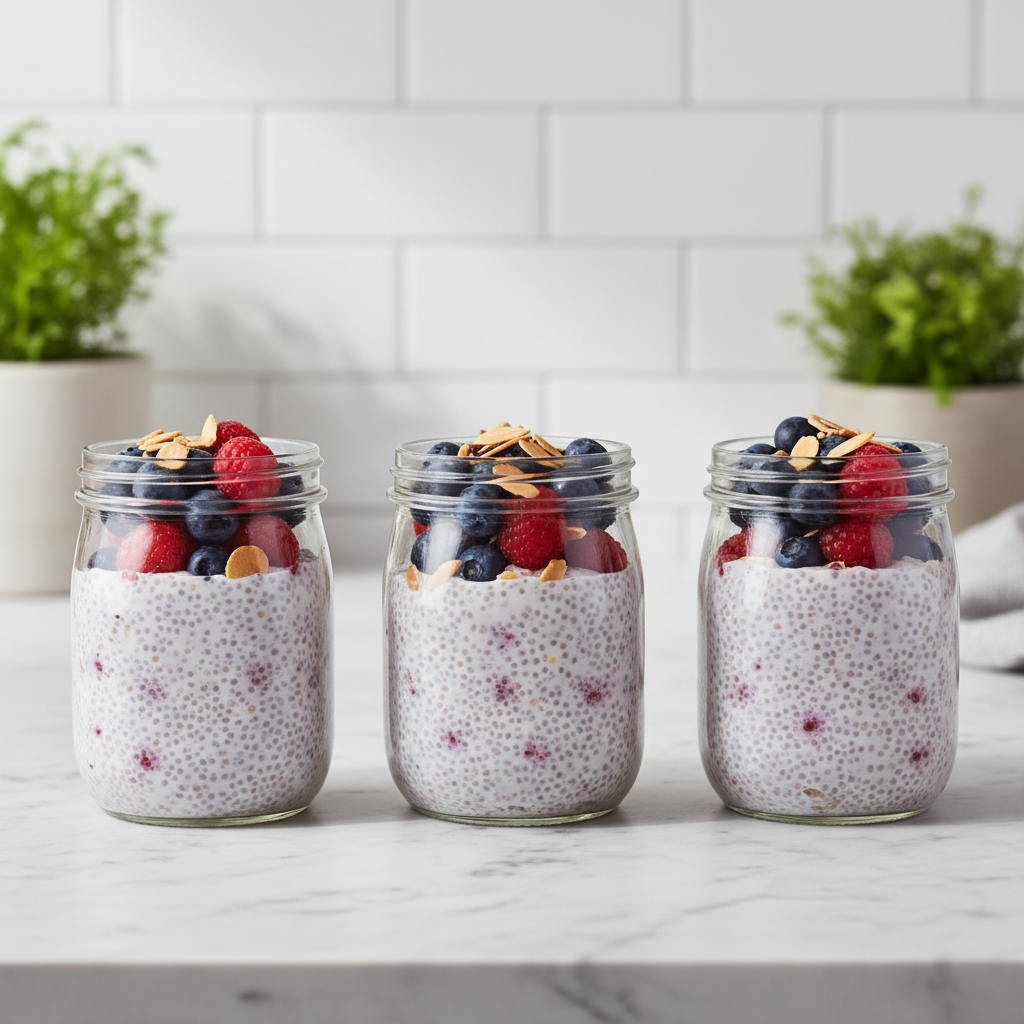
Chia pudding recipes are one of the easiest ways to lock in a vegan breakfast (or snack) that feels like a treat, not a compromise. The problem is, a lot of first attempts turn out watery, clumpy, or weirdly “seedy” in a way that’s hard to love.
This guide keeps it practical: what ratio actually works, how to fix texture without overthinking it, and a handful of flavor combinations that taste like something you’d pay for at a cafe.
One quick note before we start: chia can be a high-fiber food, so if you’re new to it, smaller portions may feel better at first. And if you manage a medical condition or take medication, it’s smart to check with a qualified professional about major diet changes.
Why chia pudding sometimes fails (and how to avoid it)
Most “bad chia pudding” comes from a few very normal mistakes, not from the ingredients themselves.
- Wrong ratio: too much liquid makes it thin, too many seeds makes it pasty.
- No second stir: chia seeds clump early, then set that way.
- Not enough time: it needs time to gel, especially with plant milks that vary by brand.
- Under-seasoned base: without salt or vanilla, it can taste flat even with fruit.
- Old chia seeds: they can gel poorly and taste stale, especially if stored warm.
According to the U.S. Food and Drug Administration (FDA), food labels and ingredient lists are the best way to check for allergens and added ingredients in packaged plant milks, which matters if you’re sensitive to gums, added sugar, or fortified minerals.
The base formula (ratio, timing, and the “second stir”)
If you want one dependable starting point, use this and adjust once you know your preference.
Classic vegan base (1 serving)
- 3 tbsp chia seeds
- 3/4 cup unsweetened plant milk (almond, soy, oat, coconut, etc.)
- 1–2 tsp maple syrup (optional)
- 1/2 tsp vanilla extract (optional but helpful)
- Pinch of salt (small, but it matters)
Mix well, wait 5 minutes, then stir again thoroughly to break up clumps. Cover and refrigerate at least 2 hours, though overnight usually gives the smoothest set.
Texture control is simple: thicker means a bit more chia or less liquid, softer means the opposite. When you change milks, expect slight differences because some are thicker and some separate more easily.
Quick self-check: what texture problem do you have?
This is the part most people skip, then they keep “fixing” the wrong thing. Find the closest match and do the small correction.
- Watery at the bottom: stir again after 5–10 minutes, or add 1 tsp chia and rest 20 minutes.
- Too thick or gummy: add a splash of milk, stir, rest 10 minutes, repeat if needed.
- Clumpy pockets: whisk harder at the start, or blend the base for a smoother style.
- “Crunchy” feel: it usually needs more time, or your chia seeds may be old.
- Flavor is bland: add salt, vanilla, citrus zest, or a spoon of cocoa/spice.
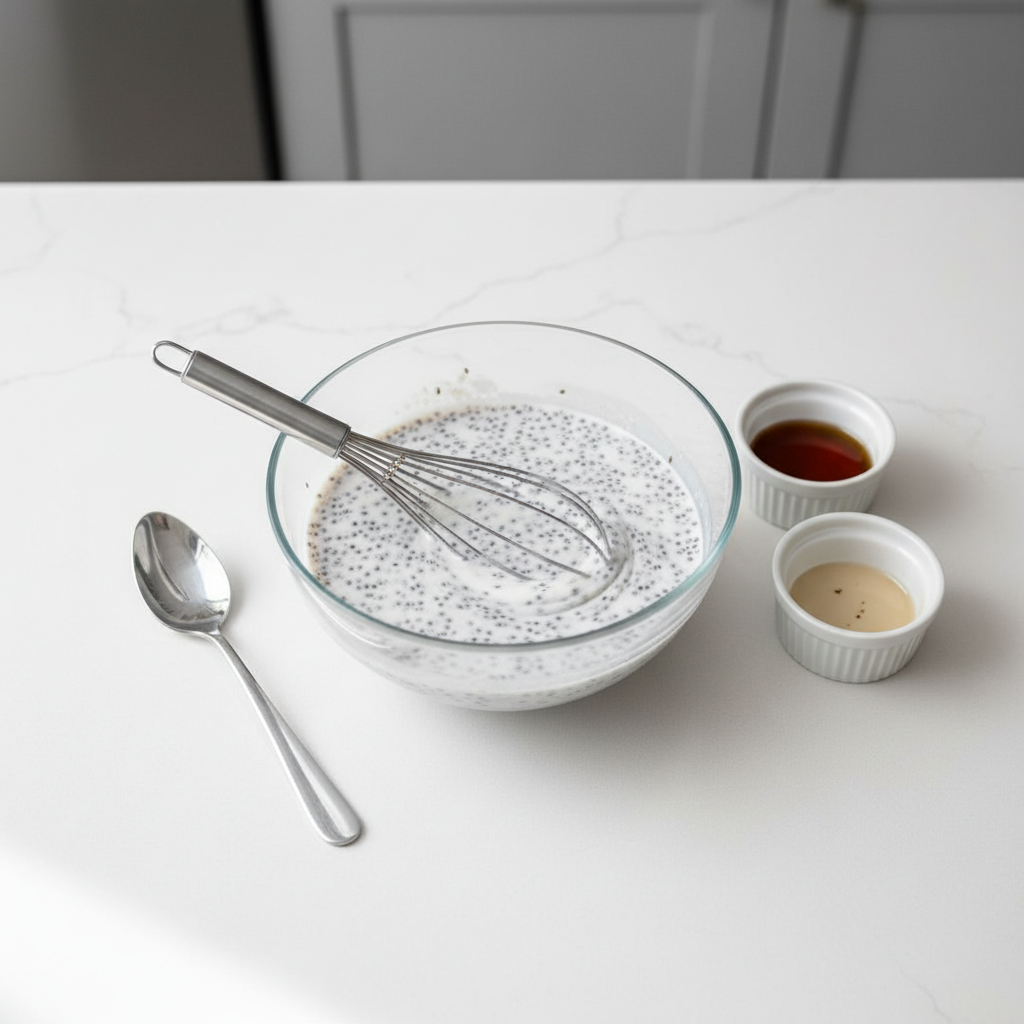
If you’re aiming for a “dessert cup” vibe, blending part of the mixture (or folding in yogurt) makes a big difference without extra work.
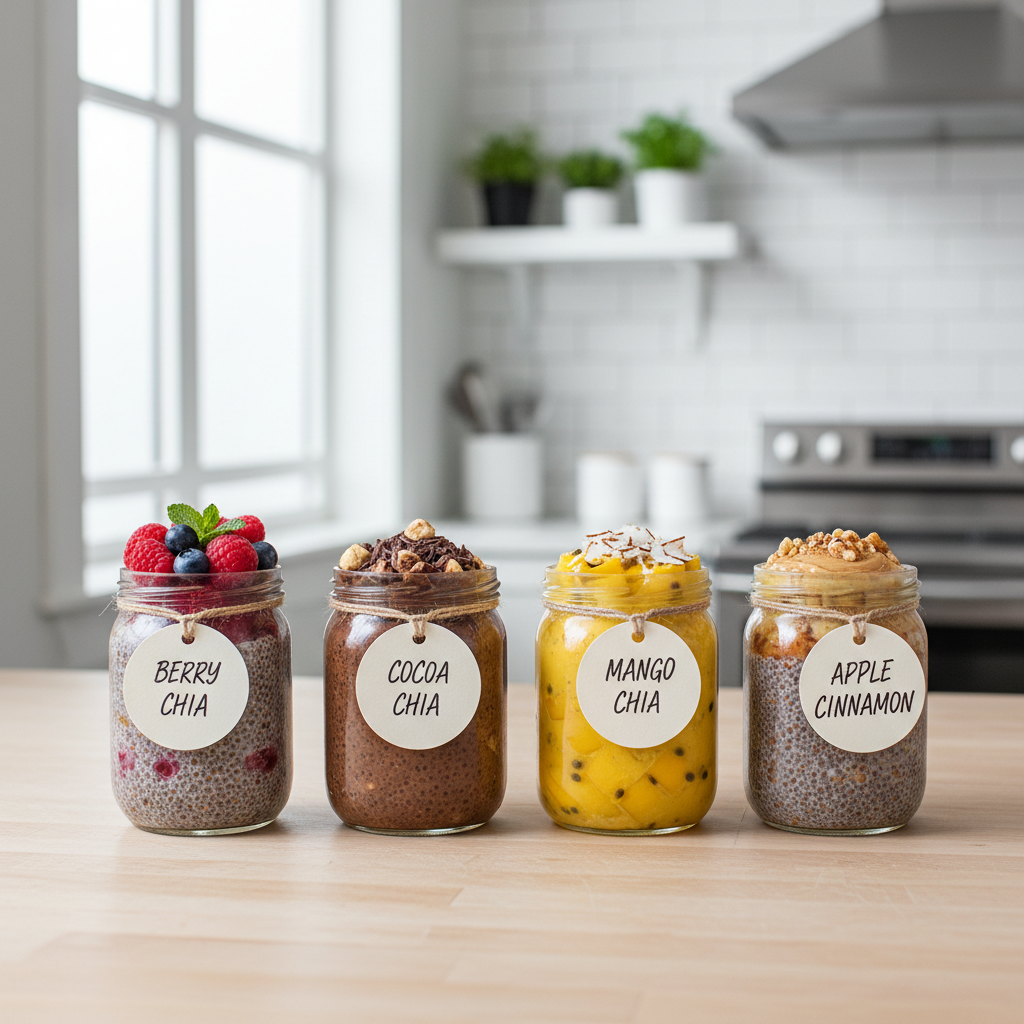
Easy vegan flavor combos you can rotate all week
These are built off the base formula above. Make the base first, then stir in add-ins, or layer toppings right before eating.
1) Berry-Vanilla “overnight oats energy” (without oats)
- Base + 1/2 cup mixed berries
- Optional: 1 tbsp lemon juice or zest
- Topping: granola or chopped walnuts
2) Chocolate-Peanut Butter
- Base + 1 tbsp cocoa powder (whisk well)
- 1 tbsp peanut butter (or powdered PB mixed with milk)
- Topping: banana slices, cacao nibs
3) Mango-Coconut (bright, not heavy)
- Use light coconut milk or oat milk
- Base + 1/3 cup mango (diced or pureed)
- Topping: toasted coconut flakes, lime zest
4) Apple Pie Spice
- Base + 1/2 tsp cinnamon + pinch nutmeg
- Stir in diced apple or quick-cooked cinnamon apples
- Topping: pecans, drizzle of maple
5) Matcha “clean and creamy”
- Base + 1 tsp matcha (sift if clumpy)
- Sweetener: maple syrup or agave to taste
- Topping: strawberries or sliced kiwi
If you’re making these for kids or for a sweeter tooth, it’s usually better to sweeten lightly in the base, then add sweetness with fruit on top so it doesn’t turn into a sugar bomb.
Meal prep that actually holds up (plus a simple table)
Chia pudding is great for meal prep, but only if you treat it like a “base + toppings” system. Most sogginess issues come from mixing crunchy toppings too early.
How to prep in 10 minutes: make 3–4 servings of the base, portion into jars, do the second stir in each jar, then refrigerate. Add fruit and crunch right before eating, or keep toppings in a separate container.
Plant milk choices and what to expect
| Plant milk | Texture | Flavor notes | Best for |
|---|---|---|---|
| Almond milk (unsweetened) | Light, can set a bit looser | Neutral | Berry, matcha, lighter puddings |
| Oat milk | Creamier, slightly thicker | Gently sweet | Apple pie, chocolate |
| Soy milk | Thick, more “custardy” | More savory/bean-like in some brands | Higher-protein vibe, chocolate |
| Coconut milk (carton) | Medium, smooth | Coconut-forward | Tropical flavors |
| Coconut milk (canned) | Very rich, sets thick | Rich coconut | Dessert-style, small portions |
According to the USDA, refrigerator temperatures should be kept at 40°F (4°C) or below for food safety. Practically, chia pudding usually keeps well for about 3–4 days when stored cold in a sealed container, though fruit mixed in can shorten that window.
Practical fixes and upgrades (without turning it into a project)
This is where chia pudding goes from “fine” to something you look forward to.
- Blend for a smoother pudding: blend the base for 10–20 seconds, then chill. The texture becomes more uniform and less seedy.
- Add vegan yogurt: replace 1/4 cup milk with unsweetened coconut or soy yogurt for tang and thickness.
- Use a pinch of salt: especially for chocolate or peanut butter versions, it sharpens flavor.
- Layer like a parfait: pudding, fruit, a little crunch, repeat. It feels more “finished” with no extra cooking.
- Warm spice trick: cinnamon, cardamom, or pumpkin spice helps when your plant milk tastes watery.
If you’re chasing a higher-protein breakfast, soy milk and a spoon of nut butter can help, but needs vary a lot, so it may be worth discussing targets with a registered dietitian if you’re adjusting macros for health reasons.
Common mistakes to stop making
- Dumping seeds into cold milk and walking away: you’ll get clumps. Stir twice, every time.
- Over-sweetening the base: it tastes good on day one, then starts to feel heavy.
- Expecting one ratio to work for every milk brand: some oat milks are thick, some are thin, adjust slightly.
- Adding crunchy toppings too early: granola turns into mush, keep it separate.
- Ignoring portion size: chia is filling, and for some people a large portion may feel like too much fiber at once.
Key takeaways + conclusion
If you want chia pudding you’ll actually repeat, keep the base simple, stir twice, and treat toppings like a separate decision. Once the texture works, rotating flavors becomes effortless, and you stop hunting for breakfast at 10 a.m.
Try this next: make one jar tonight using the classic ratio, and make a second jar with a small tweak (oat milk instead of almond, or yogurt added). By tomorrow, you’ll know which direction you like, and your future batches get a lot easier.
FAQ
What’s the best ratio for chia pudding recipes?
A reliable starting point is 3 tablespoons chia seeds to 3/4 cup plant milk per serving. If you like it thicker, add a teaspoon of chia or reduce milk slightly, then give it time to set.
Why is my chia pudding watery even after overnight?
Usually it needs a stronger stir early on, or your ratio is light on chia. Add 1 teaspoon chia, stir well, and rest 20–30 minutes; it often tightens up without starting over.
How do I make chia pudding smooth instead of seedy?
Blend the base mixture briefly before chilling, or mix in a spoon of vegan yogurt. You’ll keep the same ingredients, but the mouthfeel becomes more like a classic pudding.
Can I make vegan chia pudding without sweetener?
Yes, especially if you top with ripe fruit. If it tastes flat, vanilla and a tiny pinch of salt help more than people expect.
How long does chia pudding last in the fridge?
Many batches hold up around 3–4 days when sealed and kept cold, but fruit mixed in can break down and get watery sooner. When in doubt, keep fruit as a topping.
Which plant milk works best for chocolate chia pudding?
Oat milk and soy milk tend to taste richer with cocoa. Almond milk works too, but you may want a touch more cocoa or a little nut butter for body.
Is chia pudding healthy for everyone?
It can fit many diets, but tolerance varies, especially with fiber. If you have digestive concerns, swallowing issues, or a medical condition, it’s sensible to check with a qualified professional about portion size and fit.
If you’re trying to build a simple vegan breakfast routine, keep one “base jar” in your fridge and treat flavors like add-ons, it’s the easiest way to make chia pudding recipes feel flexible instead of fussy.